Clipping Path Quality: What Makes a Good Cutout?
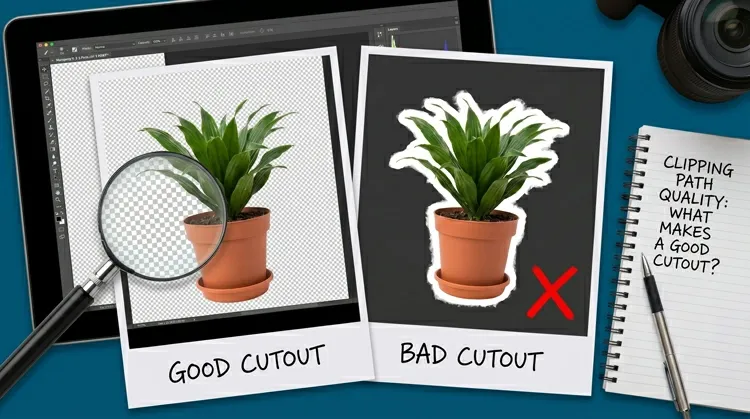
Clipping path is a workhorse in product shooting, graphic design & e-commerce. It is the cut decided how perfect image you are providing to your client. So, how actually a cutout should look? Read below to explore the anatomy of a perfect clipping path.
The Foundation: Accuracy at Every Anchor Point
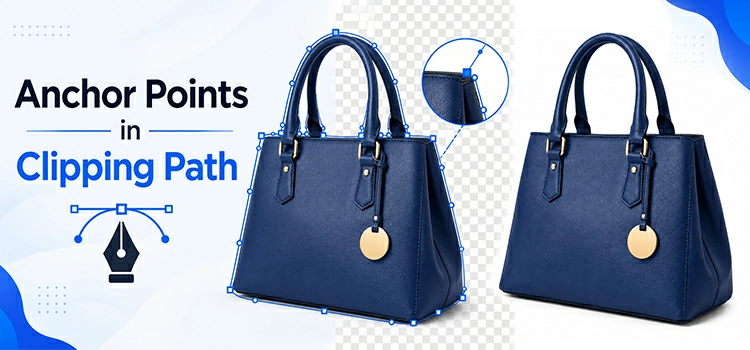
Effective clipping paths rely on strategically placing the fewest necessary anchor points to create smooth, natural curves while avoiding jagged edges or unnatural bends.
A good clipping path begins with accurate placement of anchor points. Tracings are, after all, a connect-the-dots game, and rather than go for every dot, experts prefer to use the least number of anchor points possible that will produce a smooth, realistic looking curve. Make too few, and the outline features unnatural bends. Make too many and the outline will appear jagged and uneven.
The sweet spot? Not too few point to do justice to every bend and indentation, yet not too many adding chaos to the lines. An experienced designer knows not to put anchor points on a straight edge, but to focus on the high points of a curve or corner.
Edge Quality: The Make-or-Break Factor
Expert clipping paths require smooth natural curves, consistent edge quality across all details, and properly tensioned Bezier curves for clean, accurate, and realistic cutouts.
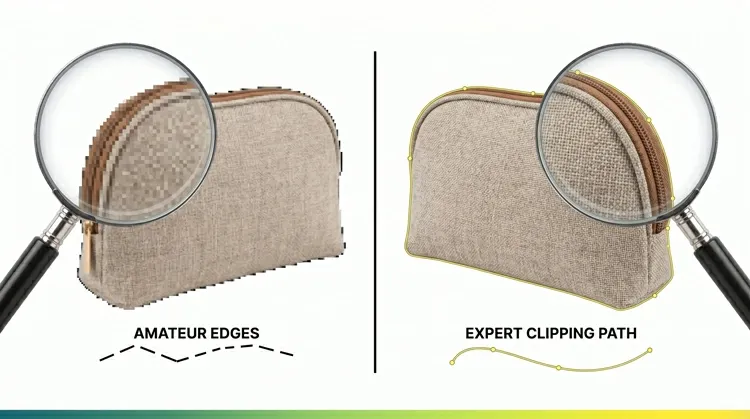
The edge where your clipping path either begins to shine or sinks in an epic failure. Here are what makes the difference between experts and amateurs: Proper cutout quality will have Bezier curves flowing along the edge of the subject:
Smooth, Natural Curves: Make sure there are no jagged steps, sections, or stair-stepping effects when you zoom in. The whole edge should be equally good.
Consistent Edge Treatment: It is not okay just to nail the easy parts. The tricky bits from hair and fur to complicated jewelry should be rated the same as simple geometric.
Proper Tension: The handles of the Bezier curves must be pulled out to allow an easy curvature between the points. Handles that are not tensioned enough result in bulges, dips or at unnatural angles revealing the silhouette to be morphed.
Context Awareness: One Size Doesn’t Fit All
Professional clipping paths vary by purpose, adapting techniques for e-commerce, marketing, print, and web use to ensure precision, visual quality, and optimized results.
Not all clipping paths are created equal, and that’s by design. A good clipping path considers its intended use:
- E-commerce products need tight, precise paths that showcase every detail
- Marketing materials might require slightly softer approaches for composite images
- Print media demands paths that account for ink spread and paper absorbency
- Web graphics can sometimes prioritize file size optimization
Professional clipping path services understand these nuances and adjust their technique accordingly.
The Details That Matter
Precision clipping paths require sharp corner handling, accurate curve fidelity, and careful management of inner holes to maintain natural shapes and deliver clean, professional results.
Corner Handling
Check the corners are really sharp, not flattened and rounded or surreptitiously extended. Good routing will have anchor points just at the corners intersections, giving crisp 90-degree (or whatever you need) bends.
Curve Fidelity
Organic forms like bottles, fashion items, or botanicals have to follow the outlines of the original to be convincing. The shape of it has to be as hide as possible when transferred over the top of the original.
Hole Management
The inner paths (like a mug’s handle, the rim of a pair of glasses, or a piece of jewelry) should be placed with the same care as the outer boundaries. These elements frequently go unnoticed, but in the finished piece they’ll be visible in the same way.
Quality Control Indicators
A professionally executed clipping path features smooth edges at high zoom, natural appearance on any background, no halo/fringing, and accurate symmetry for clean, precise cutouts.
How can you spot a professionally executed clipping path? Look for these telltale signs:
- Zoom Test: At 200-300% magnification, the path should still look smooth and intentional, not choppy or approximate
- Color Contrast: Place the cutout on various backgrounds—black, white, colored. A quality path looks natural on all of them
- No Fringing: There shouldn’t be any leftover background pixels creating a halo effect around your subject
- Symmetry Check: For symmetrical objects, the path should reflect that symmetry accurately
The Human Touch
AI background removal is improving, but human expertise remains essential for complex edges, hair, fur, glass, reflections, intricate cutouts, and achieving truly pixel-perfect clipping path accuracy.
Here’s the reality the machines don’t want you to face: quality clipping paths need a human eye.
Sure, automated background removers are rapidly improving, but they still can’t produce:
- Complex, translucent objects
- Small details such as hair or fur
- Reflective and glass surfaces
- Products with complex cutouts or patterns.
An expert eye can subtle finessing that algorithms miss, leaving the final track totally pixel accurate.
Investment in Quality
Poor clipping path quality can harm brand image, reduce sales, create extra revisions, and waste time. Small improvements in precision can dramatically enhance final image quality and impact.
Cutting corners on clipping path quality is a false economy. Poor cutouts lead to:
- Images that look unprofessional in catalogs or websites
- Wasted time making corrections and revisions
- Lost sales due to unappealing product presentations
- Brand damage from inconsistent visual quality
The difference between an acceptable clipping path and an exceptional one might only be a few minutes of extra work, but the impact on your final image is exponential.
The Bottom Line
A good cutout is not simply about getting rid of a background; it is about producing a technically sound, professional looking extraction which plays its role perfectly. Regardless of whether your clipping paths are being produced in house or through the services of a specialist, these quality indicators will help to keep you on the right track.
A reminder: In a “buy now” world, it will take consumers only moments to decide that your clipping path quality is off and that they do or do not want to buy with you. Be sure that every path hits the spot with quality.
Related posts
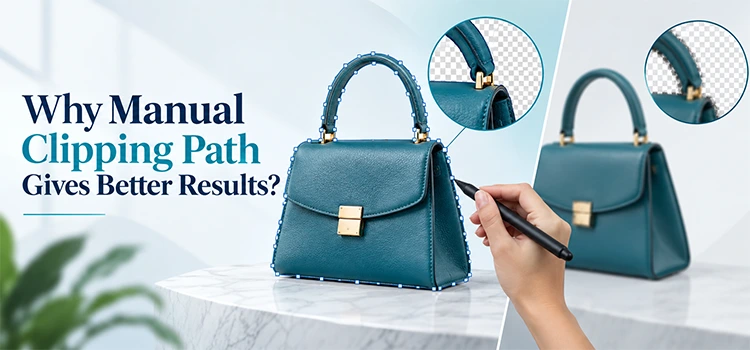
Why Manual Clipping Path Gives Better Results