Why Are Brands Coming Back From AI Photo Editing to Manual Hand Drawn Editing?
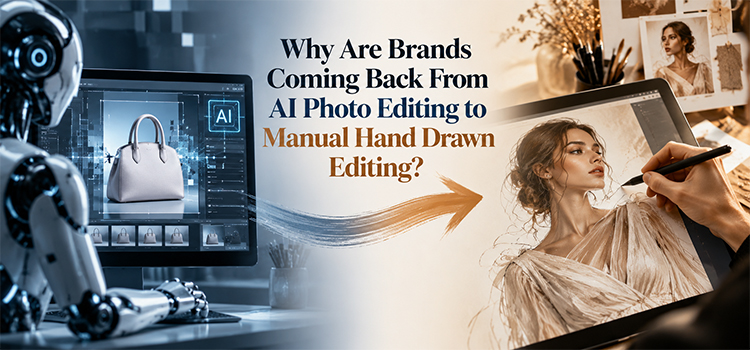
“Brands are returning to manual hand drawn photo editing because it adds a human touch that customers trust. AI editing feels fast but often looks generic. Manual editing gives brands unique visuals, better emotional connection, and stronger trust with their audience.”
Photo editing shapes how people see a brand. For years, AI tools promised speed and low cost. Many brands adopted these tools quickly. But something changed. Brands started to notice a gap. Customers wanted images that felt real and personal. This shift brought manual hand drawn image editing back into focus. This article explains why brands make this choice today.
What Is AI Photo Editing?
“AI photo editing uses software and algorithms to adjust images automatically. It can remove backgrounds, fix colors, and enhance photos in seconds. It saves time but often produces similar results across many brands, reducing originality.”
AI photo editing relies on machine learning models. These models learn from large sets of images. They apply patterns to new photos. This process works fast. A brand can edit hundreds of images in minutes. But the tool follows fixed rules. It does not understand emotion or story. Many AI edited photos look smooth but similar. Customers start to notice this pattern across different brands.
What Is Manual Hand Drawn Photo Editing?
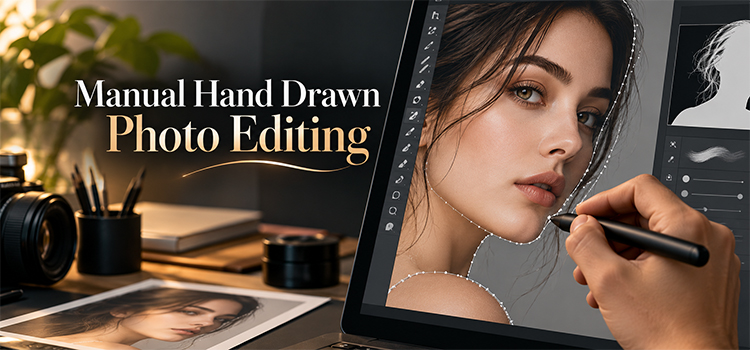
“Manual hand drawn photo editing means a human artist edits and refines each image by hand. The artist adds small details, textures, and creative touches. This method takes more time but creates a unique and personal result.”
A skilled editor studies each photo closely. They adjust light, shadow, and texture with care. They add small human touches that machines cannot copy. Each image becomes different from the next. This process takes longer than AI editing. But the result feels warm and authentic. Customers connect with images that show real effort and skill.
Why Did Brands First Move to AI Photo Editing?
“Brands moved to AI photo editing because it saves time and money. It handles large volumes of images quickly. It also reduces the need for a big editing team, which helps smaller brands manage costs.”
Speed drove this shift. E commerce brands needed thousands of product photos edited fast. AI tools made this possible. Small businesses could compete with bigger brands without hiring large teams. This felt like a smart solution. Many brands saw quick results and lower costs. For a while, this approach worked well for basic needs.
Why Are Brands Returning to Manual Photo Editing Now?
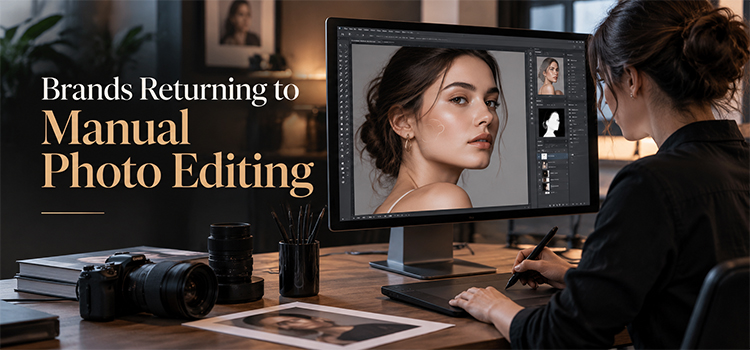
“Brands return to manual photo editing because customers want authentic and unique visuals. AI images often look repetitive and cold. Manual editing brings warmth, detail, and a human feel that builds stronger trust.”
Customers today see thousands of images every day. Many of these images look the same. AI editing often smooths skin, colors, and shapes in a predictable way. People start to feel disconnected from these visuals. Brands notice fewer customer interactions with generic photos. Manual editing solves this problem. It brings back texture, mood, and personality. This helps brands stand out again.
What Problems Do Brands Face With AI Photo Editing?
“Brands face problems like generic looking images, loss of brand identity, and errors in complex photos. AI tools struggle with fine details, such as hair, fabric texture, or natural lighting in tricky scenes.”
AI tools work well for simple tasks. But they often fail with complex images. Hands, hair, and reflections confuse many AI models. Errors appear in small details. Brands also lose their unique style when many companies use the same AI tool. Images start to look alike across different websites. This hurts brand identity and makes it harder to stand out in a crowded market.
How Does Manual Editing Improve Brand Trust?
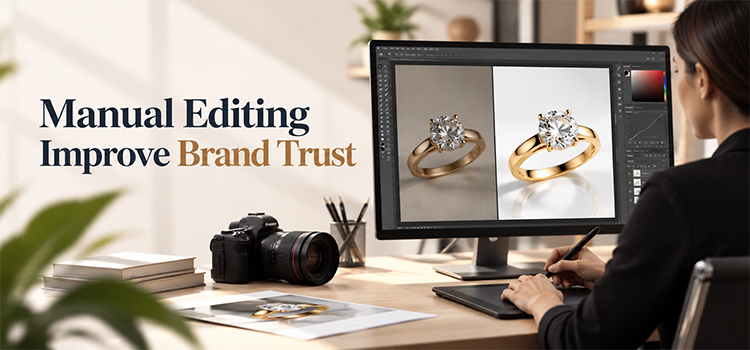
“Manual editing improves brand trust by creating honest and detailed visuals. Customers feel more connected to images made with real skill and care. This builds confidence in the brand and its products.”
Trust grows through small details. A hand edited photo shows real shadows, real texture, and real color balance. Customers sense this authenticity, even without noticing the technical reasons. This feeling builds a stronger bond between the brand and the buyer. Many brands report better customer feedback after switching to manual editing. People trust products that look real and carefully made.
Do Professional Photo Editing Services Still Use AI Tools?
“Yes, many professional photo editing services still use AI tools for basic tasks. They combine AI speed with human skill for the final touch. This mix gives brands both efficiency and authentic quality.”
Most professional teams do not reject AI completely. They use it for background removal, resizing, or basic color correction. Then a human editor refines the image by hand. This hybrid method saves time while keeping quality high. Photo editing services that offer this mix give brands the best of both worlds. Brands get fast turnaround and images that still feel personal and unique.
Frequently Asked Questions
-
What is the main difference between AI and manual photo editing?
AI photo editing uses software to adjust images fast, following fixed rules and patterns. Manual editing uses human skill to refine each photo by hand. Manual editing takes more time but creates a unique and detailed result. AI editing works faster but often looks generic across different brands and photos.
-
Why do customers prefer manually edited photos?
Customers prefer manually edited photos because they look real and detailed. Human editors add small touches that machines cannot copy, such as natural shadows and texture. This creates a stronger emotional connection. Customers trust brands that show real effort and care in their visual content and product presentation.
-
Is manual photo editing more expensive than AI editing?
Yes, manual photo editing usually costs more than AI editing. It needs skilled editors and takes more time to complete. However, many brands find the extra cost worth it. The final images look more authentic and help build stronger customer trust, which can lead to better sales and brand loyalty.
-
Can small businesses afford manual hand drawn editing?
Small businesses can afford manual editing by choosing a hybrid approach. They can use AI for basic tasks and hire a human editor for final touches. This method balances cost and quality. Many affordable photo editing services now offer this combination for small and growing businesses.
-
Does AI photo editing still have value for brands?
Yes, AI photo editing still helps brands handle large volumes of images quickly. It works well for simple tasks like resizing, cropping, or basic color correction. Many brands use AI as a first step, then add manual touches later for a more polished and authentic final result.
-
How long does manual photo editing take compared to AI?
Manual photo editing takes longer than AI editing because a human reviews each image carefully. AI can edit hundreds of photos in minutes, while manual editing may take hours for the same batch. The extra time results in higher quality and more unique looking final images.
-
Which industries benefit most from manual photo editing?
Fashion, jewelry, food, and luxury product industries benefit most from manual editing. These industries depend on fine details like texture, shine, and color accuracy. Manual editors can highlight these details better than AI tools, which often miss small but important visual elements in complex photos.
-
Can AI and manual editing work together?
Yes, many brands combine AI and manual editing for the best results. AI handles repetitive tasks quickly, while human editors add final creative touches. This hybrid workflow saves time without losing quality. It gives brands fast turnaround and images that still feel personal and carefully crafted.
-
How do brands choose the right editing method?
Brands choose their editing method based on budget, time, and image complexity. Simple product photos may only need AI editing. Complex or detailed images often need manual work. Many brands test both methods and choose the one that fits their brand style and customer expectations best.
-
Will manual photo editing replace AI editing completely?
It is unlikely that manual editing will fully replace AI editing. Both methods offer different benefits. AI provides speed, while manual editing provides authenticity. Most brands will likely continue using a mix of both approaches to balance cost, time, and the quality of their final images.
Conclusion
Brands want images that feel real. AI photo editing offers speed, but it often lacks warmth and detail. Manual hand drawn editing brings back trust, emotion, and originality. Many brands now choose a mix of both methods. This balance gives them speed and authenticity together. As customers look for real connections, manual editing will keep growing in importance.