Beyond the Ghost Mannequin: How 3D Product Visualization is Driving Sales in 2026
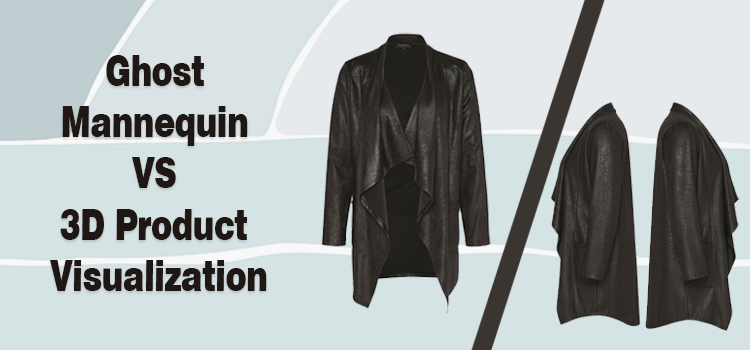
As e-commerce moves toward spatial computing and AR, the traditional “Ghost Mannequin” is being replaced by 3D Product Visualization. Here is the high-level impact:
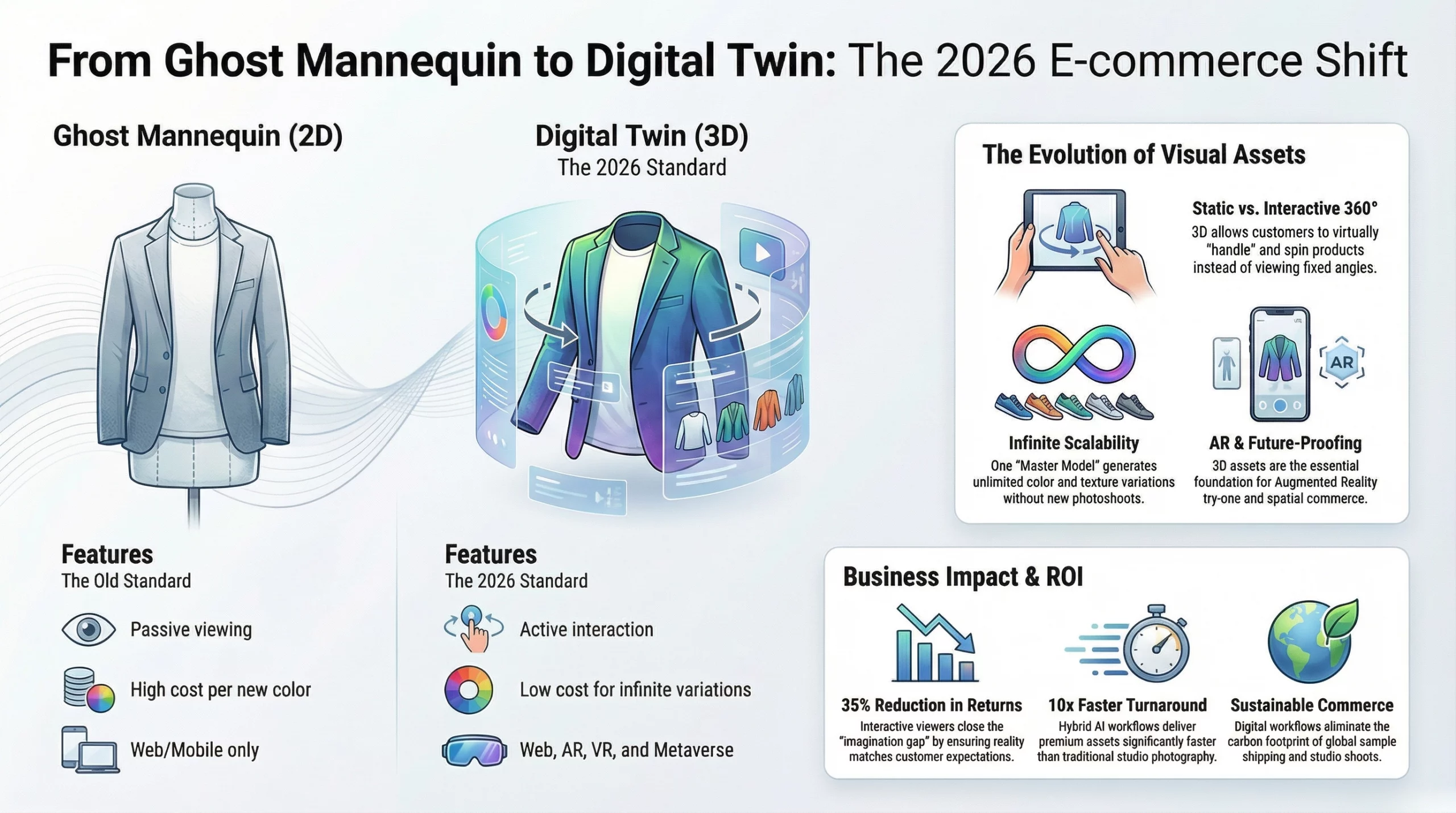
- 35% Reduction in Returns: Interactive 3D viewers allow customers to “handle” products virtually, closing the imagination gap and ensuring reality matches expectations.
- Infinite Scalability: One “Master Model” allows for instant generation of unlimited color, texture, and material variations- eliminating the cost of physical samples and logistics.
- AR & Future-Proofing: High-fidelity 3D assets are the essential foundation for Augmented Reality (AR) try-ons and spatial commerce on devices like the Apple Vision Pro.
- Sustainability: Moving to a 3D-first workflow slashes the carbon footprint by removing the need for global sample shipping and high-energy studio shoots.
- The CEI Hybrid Workflow: We combine AI-driven efficiency for geometry with human artistry for photorealistic finishing, delivering premium assets 10x faster.
For over a decade, the “Ghost Mannequin” effect was the undisputed king of e-commerce. It was a revolutionary step forward from flat-lay photography, offering a three-dimensional “hollow man” look that helped customers visualize how a garment might fit. It stripped away the distraction of models and provided a clean, professional aesthetic that defined the “Amazon look.”
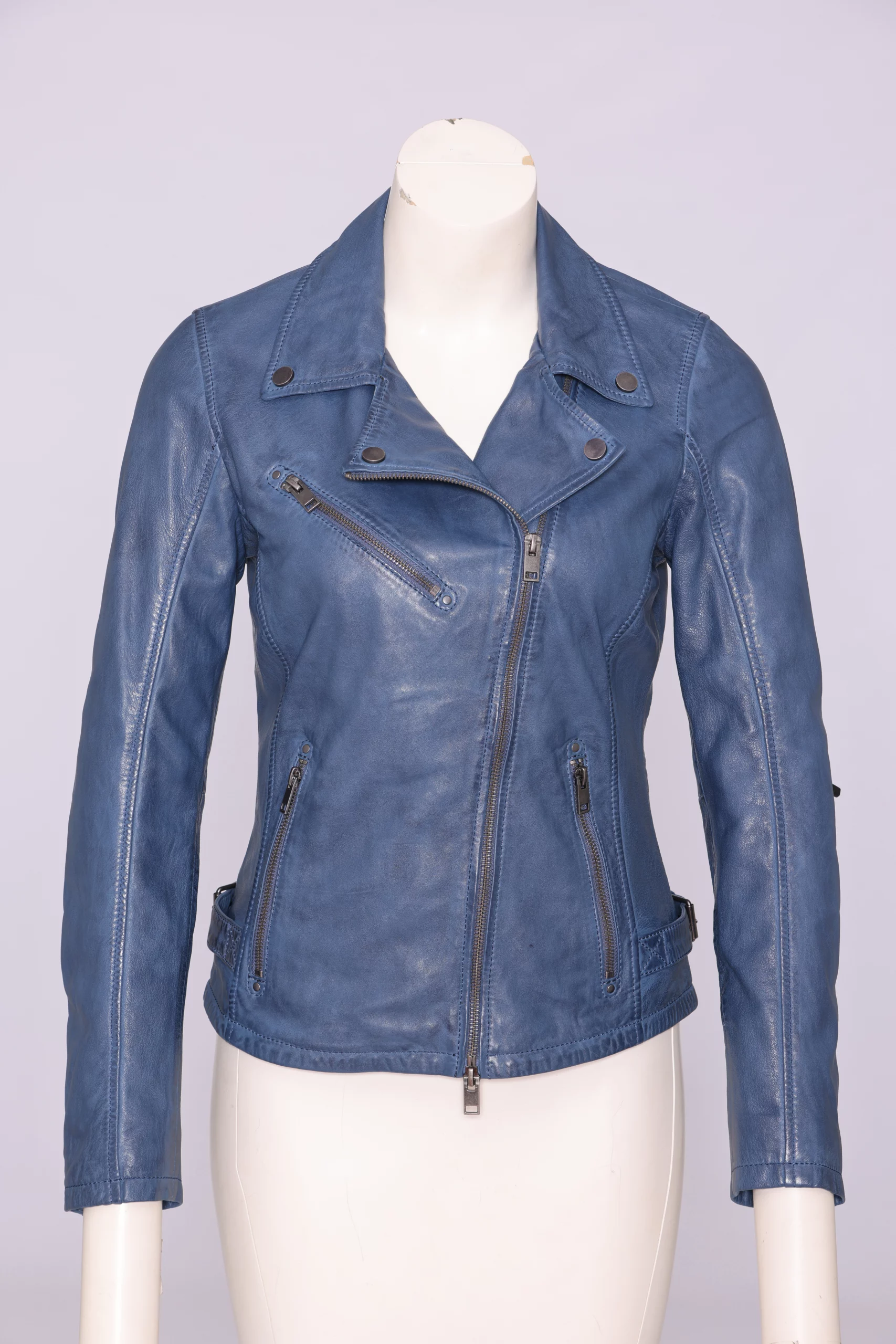
But as we navigate the digital landscape of 2026, the “Ghost Mannequin” is no longer the ceiling-it is the floor.
The modern consumer, raised on immersive gaming, spatial computing (like Apple Vision Pro), and instant-gratification social media, is no longer satisfied with static images. They do not just want to see a product; they want to experience it. This shift has birthed a new era of retail: 3D Product Visualization.
In this deep dive, we explore why 3D digital twins are replacing traditional photography and how this transition is fundamentally altering the ROI (Return on Investment) for global brands.
-
The Limitation of the Static Image: Why 2D is stalling
Traditional photography, including the ghost mannequin, is inherently “fixed.” When you take a photo, you are capturing a single moment in time, under one specific lighting setup, from one specific angle.
The Cost of Inflexibility
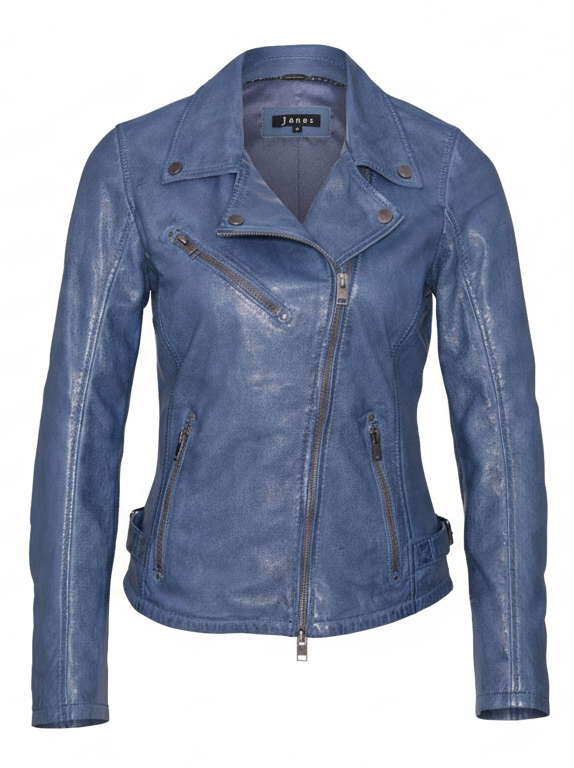
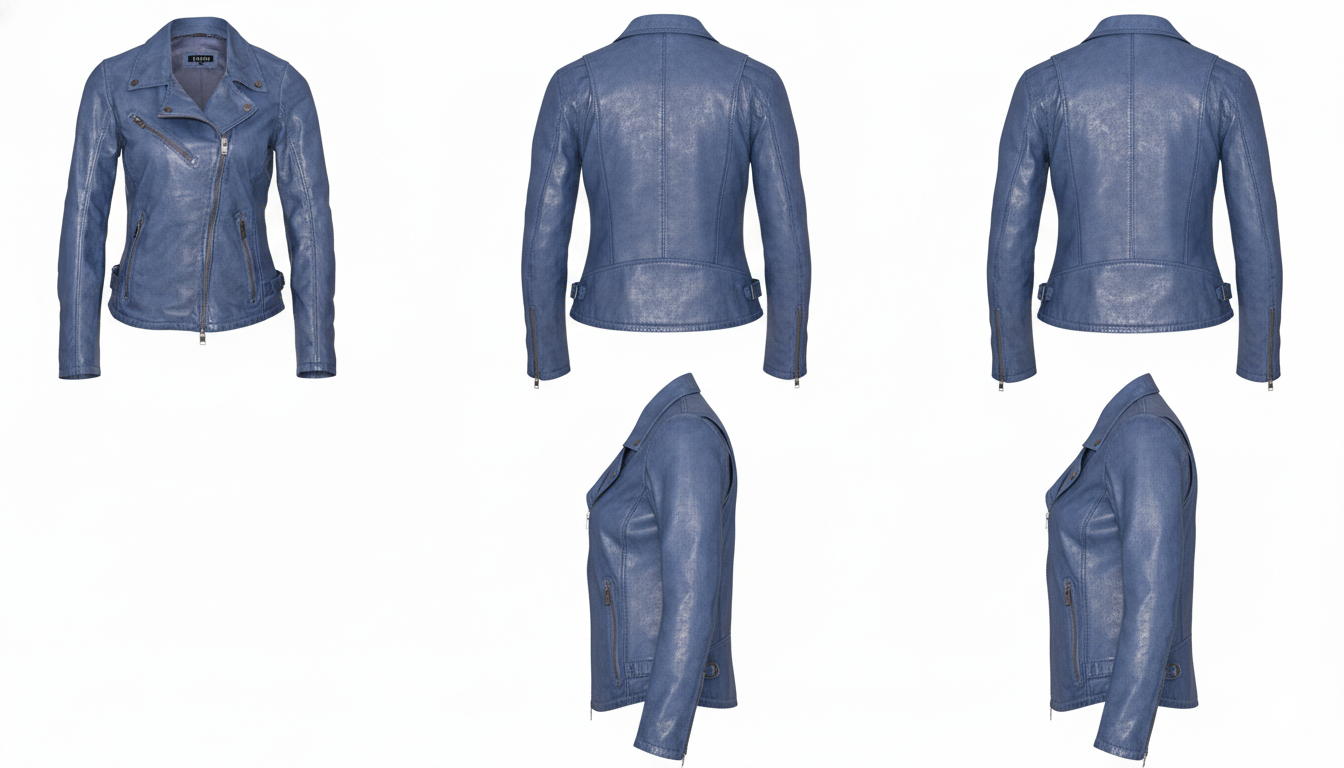
If a brand wants to show a jacket from the front, back, side, and a 45-degree angle that requires four separate setups, four separate captures, and four separate editing workflows. If the brand later decides they want a close-up of the zipper, they have to go back to the studio.
In a high-velocity market where “Time to Market” is a key performance indicator, the logistics of traditional photography-shipping samples, hiring talent, setting up lighting, and manual retouching-have become a bottleneck.
The “Imagination Gap”
Even with high-quality ghost mannequin shots, a “gap” remains. The customer cannot see how the light hits the fabric as it moves. They cannot zoom in infinitely to see the weave of the linen or the grain of the leather without the image becoming pixelated. This gap is where doubt lives, and in e-commerce, doubt is the killer of conversions.
-
Defining 3D Product Visualization in 2026
In 2026, 3D Product Visualization is not just a “drawing” of a product. It is a Digital Twin-a mathematically accurate, physically-based rendering (PBR) of a physical object.
Through advanced 3D modeling and texturing, we replicate:
- Mesh Topology: The exact “form” and “drape” of the item.
- Material Physics: How light bounces off silk vs. wool vs. brushed gold.
- Photometric Accuracy: The way shadows fall in a 3D environment.
When these elements are combined, the result is indistinguishable from a photograph. However, unlike a photograph, a 3D model is a living asset.
A Comparison: Traditional Photography vs. 3D Visualization
| Feature | Ghost Mannequin (2D) | 3D Visualization |
| Perspective | Fixed / Single Angle | Interactive / 360° |
| Scalability | High cost per new color/shot | Low cost for infinite variations |
| Engagement | Passive viewing | Active interaction |
| Future-Proof | Web/Mobile only |
Web, AR, VR, and Metaverse ready |
-
Key Driver: The End of the Return Crisis
The single biggest drain on e-commerce profitability is the return rate. In some fashion sectors, return rates can climb as high as 30% to 40%. The most common reason? “The product didn’t look like the picture.”
Interactive Confidence
3D visualization allows for a 360-degree Viewer. Instead of scrolling through 5 static images, a customer can grab the product with their cursor (or finger) and spin it. They can look under the hood, check the interior lining, and zoom in on the texture.
By providing this level of transparency, brands are seeing a 35% decrease in returns. When a customer “handles” a virtual product, their expectations are aligned with reality before they ever hit the “Buy” button.
-
Scalability: From One Sample to Infinite Variations
One of the most powerful aspects of 3D visualization is the ability to create “Virtual Samples.”
Imagine a furniture company releasing a new sofa available in 15 different fabrics and 4 different leg finishes. In the traditional world, that would require 60 different physical sofas to be manufactured and photographed.
In the 3D world:
- We build one “Master Model” of the sofa.
- We create 15 “Digital Materials” (Digital Swatches).
- And render all 60 variations instantly.
This process, known as configurable visualization, allows brands to show their entire inventory without the massive overhead of physical logistics. It allows for “Pre-Commerce”-selling products before they are even manufactured, based solely on high-fidelity 3D assets.
-
Augmented Reality (AR): The New Retail Floor
We cannot discuss 2026 sales without mentioning Augmented Reality. With the integration of AR into mobile browsers and wearable tech, the “Product Page” has moved into the customer’s living room.
- Spatial Commerce: A customer can place a 3D-modeled coffee table in their actual room to see if it fits.
- Virtual Try-On: Using 3D assets, customers can “wear” glasses, watches, or even sneakers via their camera.
Traditional ghost mannequin photos cannot do this. They are flat. A 3D model is a requirement for AR. By investing in 3D visualization now, brands are future-proofing their content for a world where the line between “online” and “in-person” is permanently blurred.
-
The 2026 Sustainability Mandate
Modern consumers-particularly Gen Z and Gen Alpha-are hyper-conscious of environmental impact. The traditional photography cycle is incredibly carbon-intensive: shipping physical samples across the globe, the energy consumption of large-scale studios, and the waste of “one-off” props.
3D visualization is inherently sustainable. It eliminates the need for physical shipping for the sake of marketing images. By reducing returns, it also slashes the carbon footprint associated with reverse logistics. For brands looking to improve their ESG (Environmental, Social, and Governance) scores, moving to a “3D-first” content strategy is a major win.
-
Industry Use-Cases: Where 3D is winning
While fashion was the early adopter of the ghost mannequin, 3D visualization is dominating across multiple high-value sectors:
Luxury Jewelry & Watches
Jewelry is notoriously difficult to photograph due to reflections. 3D rendering allows for “perfect” lighting that highlights the brilliance of a diamond or the “brush” of a stainless-steel watch without the “noise” of a physical studio reflection.
Consumer Electronics
3D allows for “exploded views” where a customer can see the internal components of a smartphone or a pair of headphones. This builds a narrative of quality and engineering that a simple exterior photo cannot convey.
Real Estate & Home Decor
As we have seen with our Cinematic Real Estate services, 3D allows buyers to walk through a “planned” space. In home decor, it allows for “Contextual Upselling”-showing a 3D-modeled lamp on a 3D-modeled side table, creating a complete lifestyle scene without ever picking up a camera.
-
The “Hybrid” Approach: AI and Human Artistry
At Color Experts International (CEI), we recognize that the move to 3D can feel daunting. That is why we advocate for a hybrid workflow.
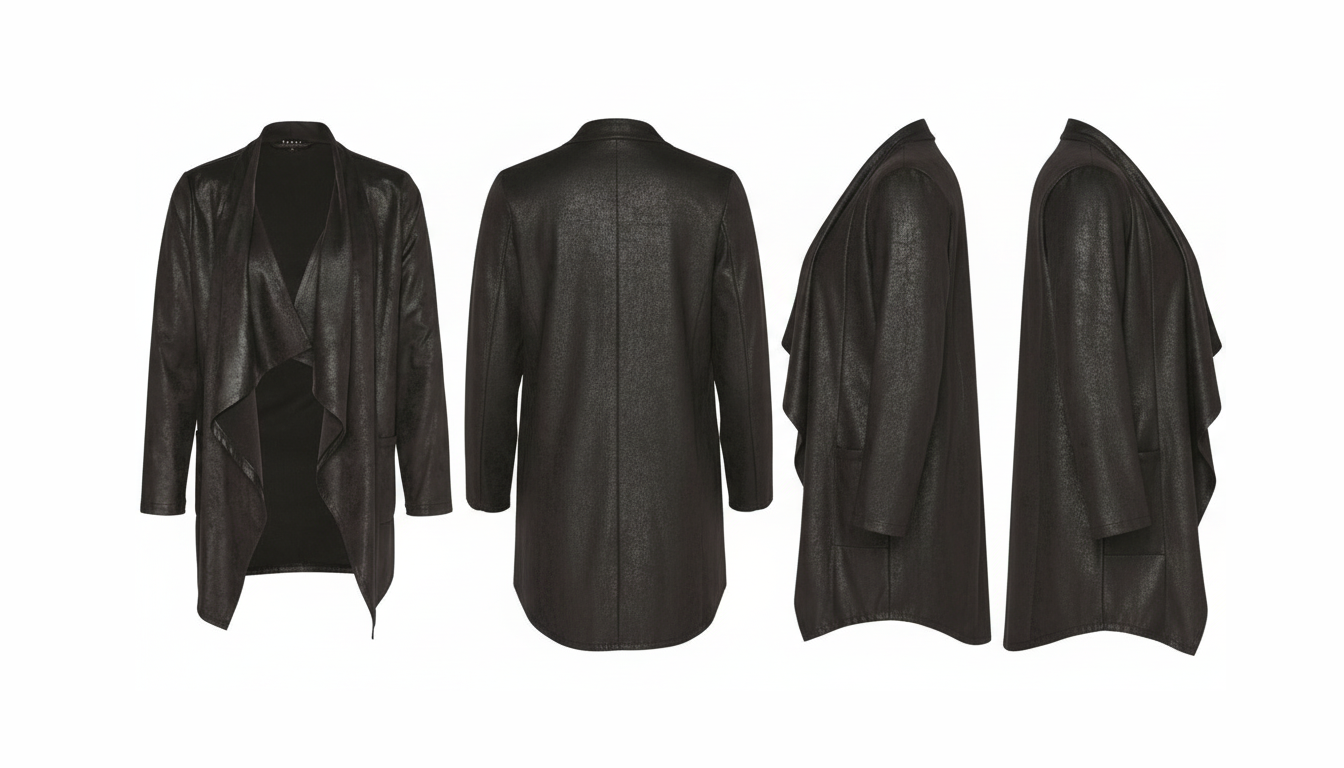
We use Artificial Intelligence to handle the heavy lifting of geometry creation and basic UV mapping, which keeps costs down for our clients. However, the “final 10%”-the subtle way a shadow falls, the “lived-in” crinkle of a fabric, the precise color grading-is handled by our senior 3D artists.
It is this human touch that ensures a 3D model does not look like a “video game asset”, but like a premium, luxury product.
-
How to Begin the Transition
Transitioning from 2D ghost mannequin photography to 3D does not have to happen overnight. Most successful brands follow a “Migration Roadmap”:
- Identify High-Impact Products: Start with your best-sellers or products with the highest return rates.
- Create Digital Twins: Work with a partner like CEI to convert those products into high-fidelity 3D assets.
- Deploy Interactive Viewers: Replace the primary image on the product page with a 360-degree 3D viewer.
- Analyze the Data: Measure the lift in conversion and the drop in returns. The data will almost always justify the expansion to the rest of the catalog.
Frequently Asked Questions: 3D Product Visualization
-
What exactly is 3D Product Visualization?
3D Product Visualization is the process of creating a “Digital Twin” of a physical product using advanced modeling and rendering software. Unlike a standard photograph, a 3D model is a mathematical representation of the object that can be rotated 360 degrees, animated, and placed into any digital environment or Augmented Reality (AR) setting.
-
How does 3D visualization differ from the traditional “Ghost Mannequin” effect?
While the Ghost Mannequin effect provides a 2D “hollow body” view of a garment, it remains a static image. 3D visualization allows for total interactivity. A customer can spin the product, zoom in on specific fabric textures, and see how light interacts with the materials in real-time. Additionally, 3D models can be updated with new colors or textures instantly without a new photoshoot.
-
Can 3D visualization really increase my e-commerce sales?
Yes. Data from 2025 and 2026 shows that listings featuring interactive 3D content see significantly higher engagement rates. By allowing customers to “handle” the product virtually, you build buyer confidence and reduce the hesitation that often leads to abandoned carts.
-
How does moving to 3D help reduce product return rates?
The #1 reason for returns is that the product looks different in person than it did in the photos. 3D visualization closes this “imagination gap” by providing a 100% accurate representation of form, drape, and material. When expectations match reality, return rates typically drop by 20% to 30%.
-
Is 3D visualization required for Augmented Reality (AR) shopping?
Absolutely. Traditional 2D photos cannot be placed into a physical space. To allow a customer to “place” a sofa in their living room or “try on” a watch using their smartphone camera, you must have a high-quality 3D model. Investing in 3D visualization is the first step toward enabling AR commerce for your brand.
-
Isn’t 3D modeling more expensive than traditional photography?
While the initial creation of a high-fidelity “Master Model” can have a higher upfront cost than a single photo, the long-term ROI is much higher. Once a model is built, creating variations (different colors, patterns, or environments) costs a fraction of a new photoshoot. You save significantly on logistics, shipping samples, and studio time.
-
Which industries benefit the most from 3D product rendering?
While 3D is transformative for Fashion and Apparel, it is also high-performing for Luxury Jewelry, Furniture, Consumer Electronics, and Automotive parts. Any industry where detail, texture, and “fit” are important to the buyer will see a major benefit from 3D assets.
-
What do I need to provide to start a 3D visualization project?
To create an accurate Digital Twin, we typically require high-resolution reference photos from multiple angles, physical dimensions, and-if possible-information about the materials (e.g., fabric type or metal finish). In some cases, shipping a physical sample to our lab ensures the highest level of photometric accuracy.
-
How long does it take to create a high-fidelity 3D digital twin?
The timeline depends on the complexity of the product. A simple geometric object might take 2-3 days, while a complex piece of jewelry or a highly detailed garment with intricate textures may take 5-7 days. At Color Experts International, we utilize an AI-hybrid workflow to ensure industry-leading turnaround times without sacrificing quality.
-
Will the 3D model look “fake” or like a video game asset?
Not at CEI. We use Physically Based Rendering (PBR), which simulates how light actually behaves in the real world. By combining AI efficiency with the creative eye of senior 3D artists, we ensure that the final render is virtually indistinguishable from a high-end professional photograph.
Conclusion: The Competitive Edge of 2026
The “Ghost Mannequin” was a great tool for the first two decades of e-commerce, but the market has outgrown the static image. In 2026, Visual Authority is the only way to stand out in a crowded marketplace.
3D Product Visualization offers a rare “triple threat”: it reduces costs, increases sales, and future-proofs your brand for the AR-driven future.
At Color Experts International, we are proud to be at the forefront of this transformation. Our mission is to take your products “beyond the mannequin” and into a world where your digital assets are just as real, beautiful, and impactful as the physical items they represent.
Is your brand ready for the 3D revolution?
Explore our 3D Visualization Services and let’s build the future of your storefront together.