Clothing Photography for eCommerce: Ideas, Tips, Style, and Setup
In online retail business, clothing photography is not just about taking attractive pictures, it is about drawing potential customers’ attention, driving sales conversions, building trust, and reducing product returns. In fact, many researches consistently show that product photos are among the most influential factors in online buying decisions. Around 67% of online shoppers say that product image quality is too important when deciding whether to buy.
In fashion eCommerce, customers cannot touch fabrics, try on garments, or judge fit physically. Through photography and visual presentation, a brand can communicate quality, style, and fit.
Let’s explores the ideas, techniques, setups, and professional tips for clothing photography in eCommerce. It also includes industry data, workflow insights, and best practices used by leading fashion brands.
The Role of Clothing Photography in eCommerce

Before discussing about the clothing photography setups and styles, it is important to understand why this particular product photography matters so much in online retail.
Key Statistics on eCommerce Photography
| Metric | Industry Data |
| Consumers who consider product images the most important factor | 67% |
| Buyers who rely on photos before purchase | 75% |
| Conversion increase with professional product photos | 33–94% |
| Average fashion eCommerce conversion rate | 2.4% |
| Average number of images per fashion product | 8 images |
Shopify research shows this fashion eCommerce industry benchmarks.
These numbers reveal something crucial- better eCommerce clothing photography directly improves sales performance.
Some research show that high-quality product photos can increase conversion rates by up to 94% compared with poor-quality product item images. Another study found that simply improving image size by 28% increases conversions by 63%.
For fashion brands that competing online, product photography is not an optional visual element- it is a revenue generator.
Why Cloth Photography Is Different from Other Product Photography
Taking photograph of clothing products is one of the most challenging task. Unlike electronics or accessories product, garments depend heavily on:
- Fit
- Fabric texture
- Movement
- Draping
- Styling
- Human perception
Besides that, fashion eCommerce faces a major issue: high return rates.
Online apparel product return rates typically range between 16% and 25%, often because the product looked different from the images when customers touch the product.
This means clothing photography must achieve several goals simultaneously:
- Show accurate colors
- Display texture and fabric quality
- Communicate fit and scale
- Inspire lifestyle aspirations
- Maintain brand consistency
The better the product images communicate these aspects, the lower the return rates.
Types of Clothing Photography for eCommerce
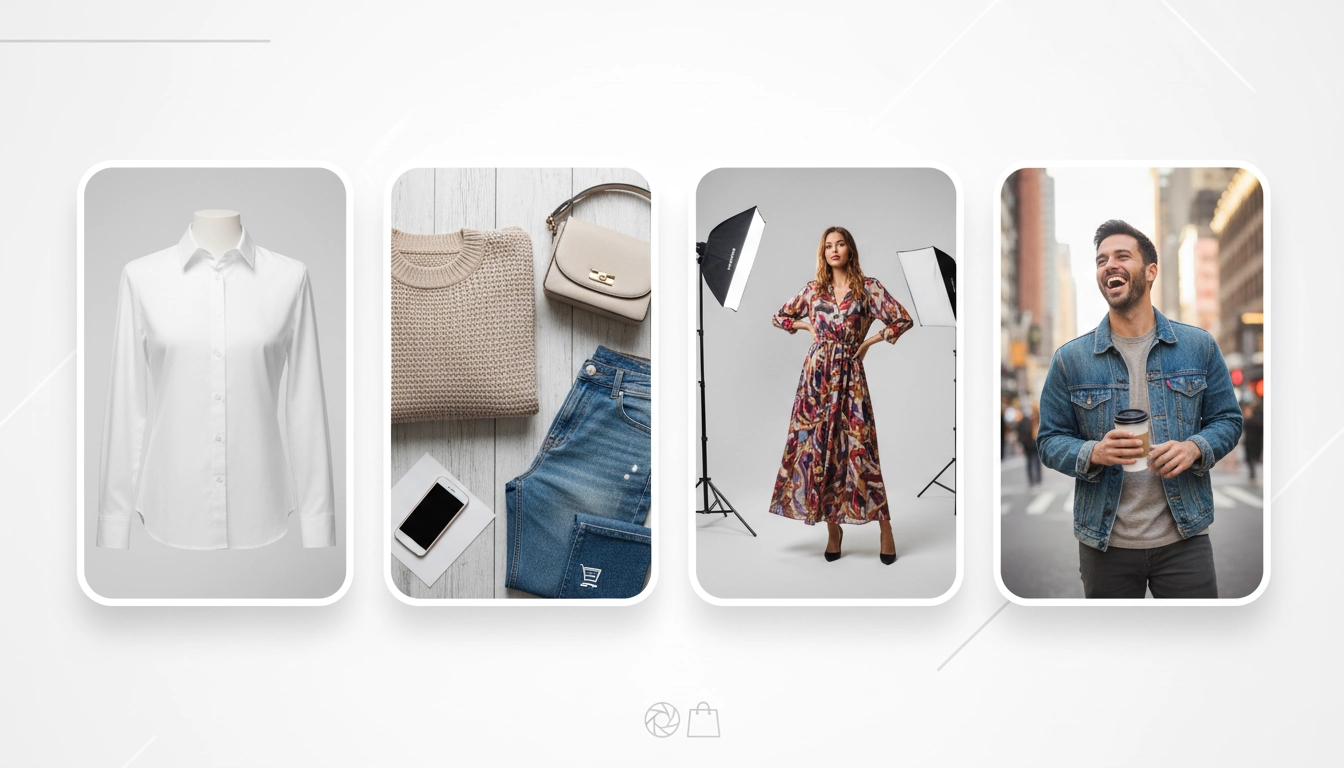
Professional fashion retailers rarely rely on a single photography style. Instead, they combine multiple styles to create a complete product presentation.
-
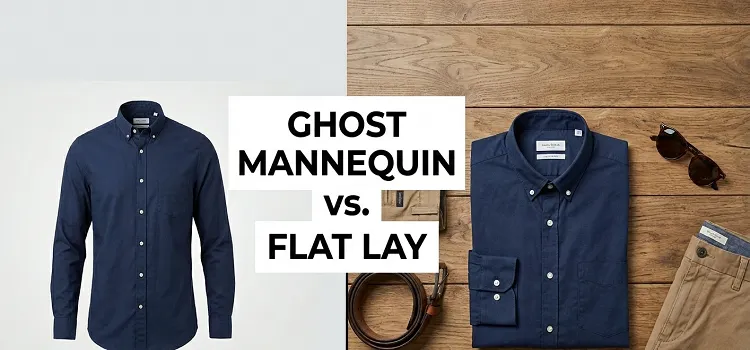
Ghost Mannequin Photography
Ghost mannequin photography is one of the most popular clothing image manipulation techniques in eCommerce apparel.
Key characteristics
- Clothing appears worn but without visible mannequins
- Focus on garment shape
- Clean and professional presentation
Benefits
- Highlights product structure
- Keeps focus entirely on clothing
- Ideal for catalog-style stores
This technique is widely used by fashion retailers like Zara and Uniqlo for their product landing pages.
-
On-Model Photography
On-model photography shows clothing worn by real people. It has a lot of benefits to display products.
Why it works
Customers can visualize:
- Body fit
- Movement
- Styling ideas
- Real-life appearance
Ecommerce related studies show on-model imagery can increase conversion rates by up to 33% because it builds trust and context for online shoppers.
-
Flat Lay Photography
Flat lay photography displays garments laid on a surface.
Best used for
- T-shirts
- Casual wear
- Accessories
- Lifestyle product collections
This style works particularly well for social media marketing and brand storytelling.
-
Lifestyle Photography
Lifestyle photography places clothing item in real-life scenarios.
Examples:
- Street photography
- Outdoor shoots
- Everyday lifestyle environments
Brands can increase conversion rates by around 30% combining studio and lifestyle photography, because customers see both product details and real-life usage.
Clothing Photography Gadgets
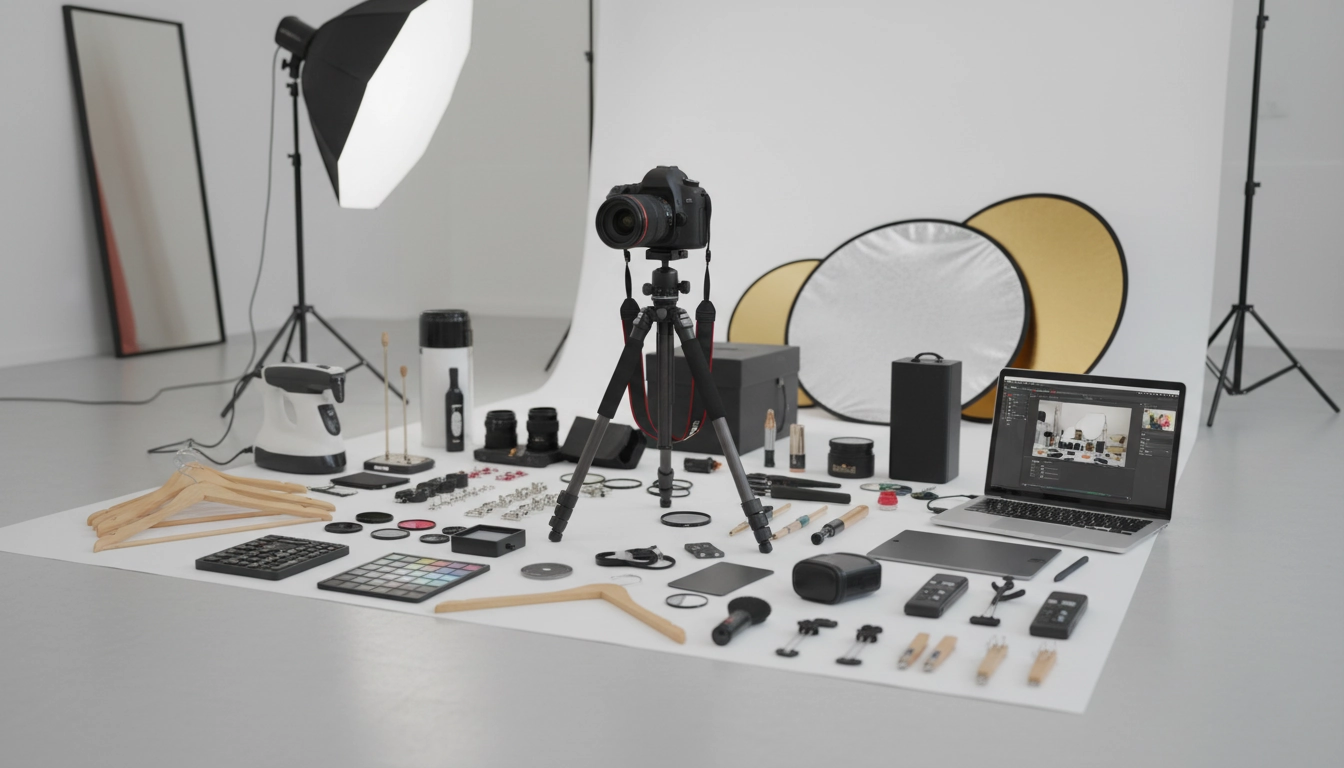
You do not need a Hollywood-level studio for clothing photo shooting, but professional gear improves quality, accuracy, and consistency.
Basic equipment checklist
| Equipment | Purpose |
| DSLR or Mirrorless Camera | High-resolution product images |
| Tripod | Stability and consistent framing |
| Lighting kit | Even illumination |
| White backdrop | Clean eCommerce look |
| Mannequin or model | Fit representation |
| Reflectors | Control shadows |
| Tethered shooting setup | Faster workflow |
Most eCommerce fashion brands rely on controlled studio lighting to ensure consistency across hundreds or thousands of product photos.
Lighting Setup for Clothing Photography
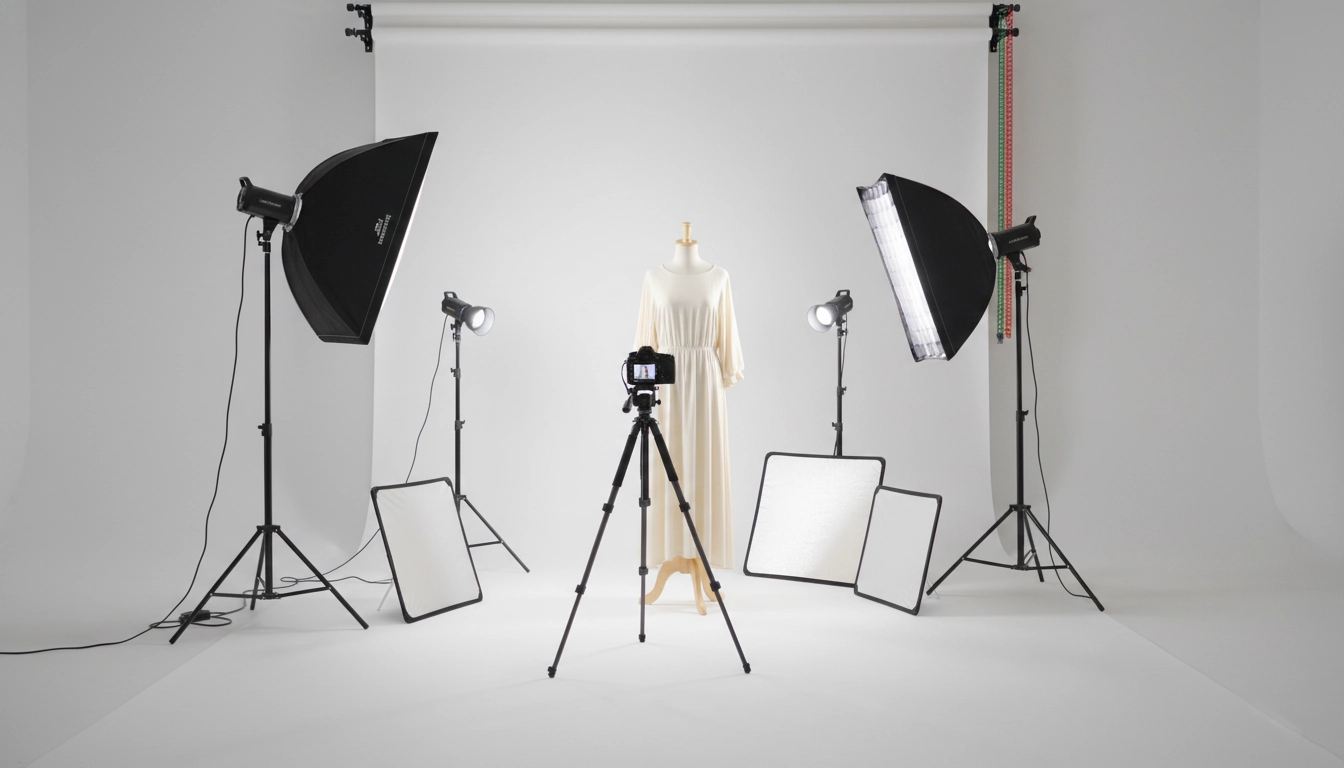
Lighting for photography is arguably the most important technical element. Best quality lighting setup can produce the top-notch quality product images that even requires less editing.
Poor lighting can cause:
- inaccurate colors
- harsh shadows
- washed-out textures
Research on eCommerce photography shows that lighting influences how customers perceive product quality. Though product photo lighting issues can be solved by photo retouching services, but still if you can use the best quality lighting, post-production cost will be much less.
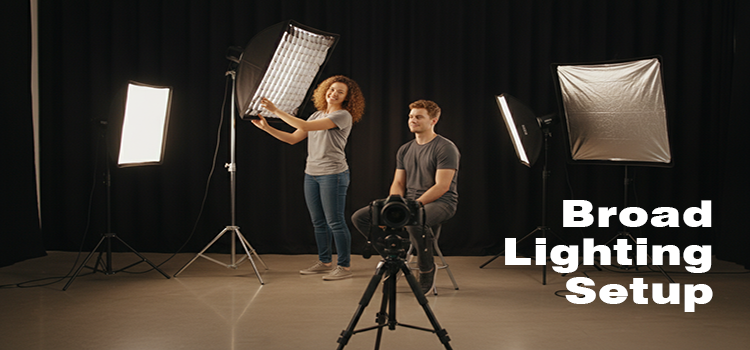
Standard lighting setup
Most clothing studios use a three-point lighting setup:
- Key light – primary light source
- Fill light – reduces harsh shadows
- Back light – separates product from background
Softboxes/diffused lights help maintain soft shadows and natural fabric texture.
Camera Settings for Fashion Product Photography
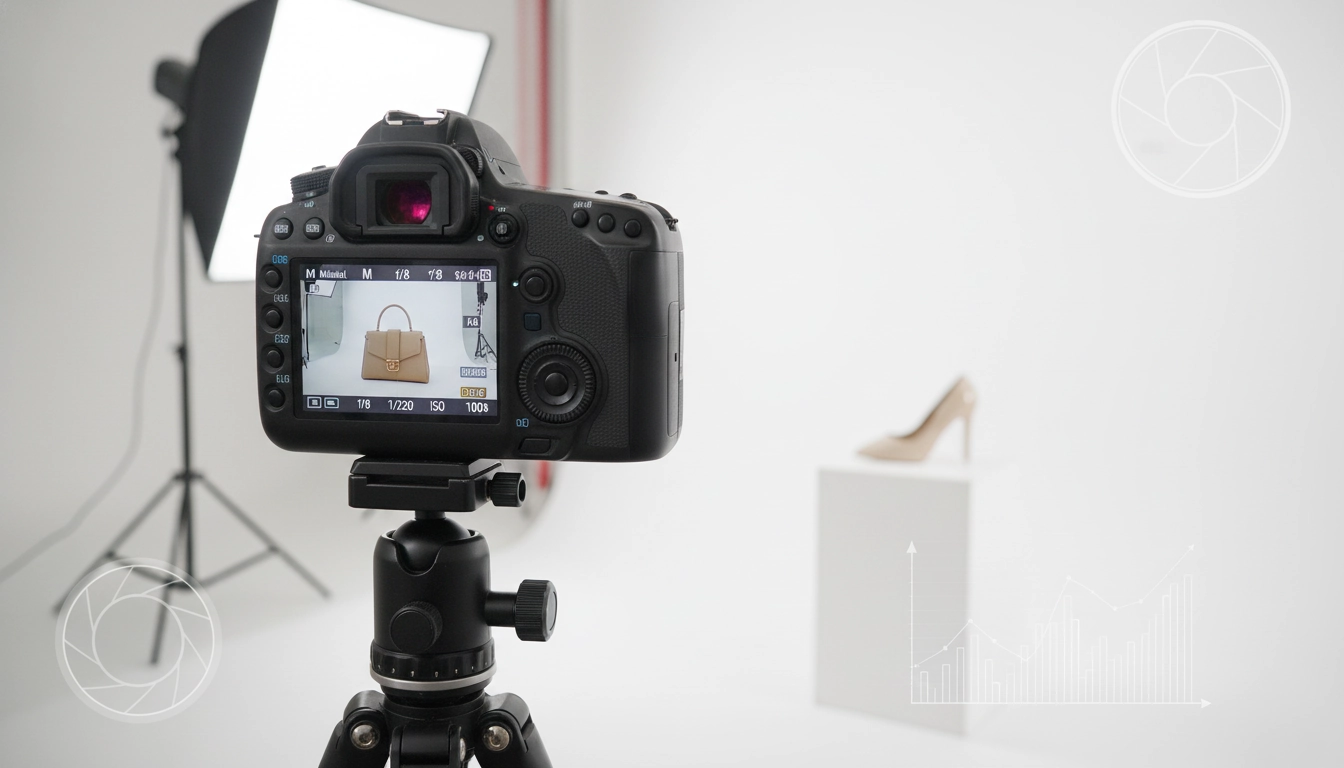
Even with great lighting, camera settings must be optimized. The combination of great lighting and proper camera setting can produce the best quality product photographs.
Recommended settings
| Setting | Recommended Range |
| Aperture | f/8 – f/11 |
| ISO | 100 – 200 |
| Shutter Speed | Adjust based on lighting |
| White Balance | Custom or daylight |
Higher aperture values ensure sharpness across the entire garment.
Composition Tips for Clothing Photography
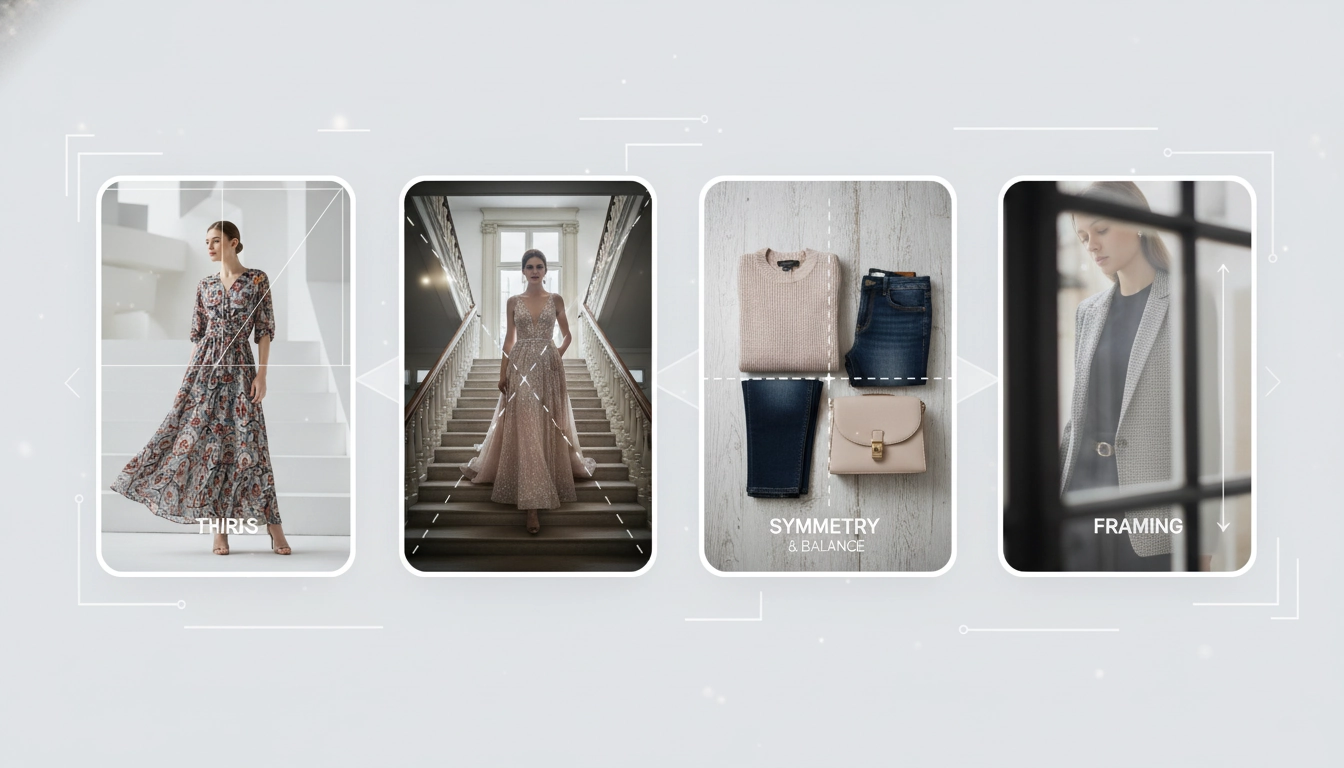
Composition determines how attractive a product appears. Professional fashion photographers typically follow these rules:
-
Maintain consistent framing
Every product should appear similar across a catalog.
Consistency improves:
- brand trust
- browsing experience
- conversion rates
-
Show multiple angles
Fashion brands now average around eight images per product to fully communicate fit and detail. Customers can take decision on these 8 product photos.
Common angles include:
- front
- back
- side
- close-up of fabric
- detail shot
- lifestyle image
-
Capture fabric texture
Zoom shots help show:
- stitching
- fabric weave
- embellishments
This reduces uncertainty for customers.
-
Show movement
Apparels looks better when it appears natural.
Ways to create movement:
- wind machines
- model walking
- natural poses
Styling Ideas for Fashion eCommerce Photography
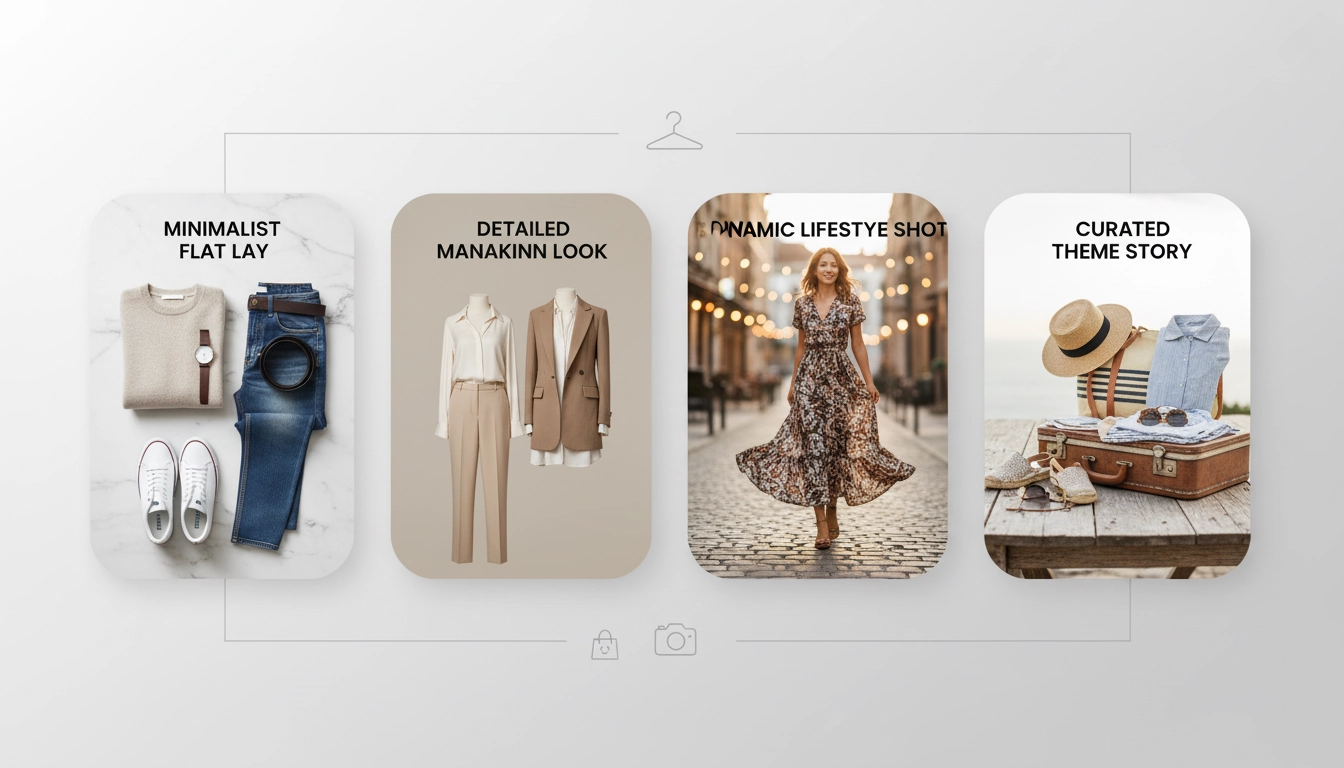
Photography alone is not enough. Styling with product visuals play a crucial role.
Popular styling approaches
Minimalist styling
- white background
- clean composition
- product-focused
Editorial styling
- dramatic lighting
- storytelling
- fashion magazine feel
Lifestyle styling
- everyday situations
- natural environments
Fashion brands often combine these styles depending on different platforms.
Example:
| Platform | Preferred Style |
| Website product page | Studio photography |
| Lifestyle | |
| Ads | Editorial |
Photography Post-Production and Retouching
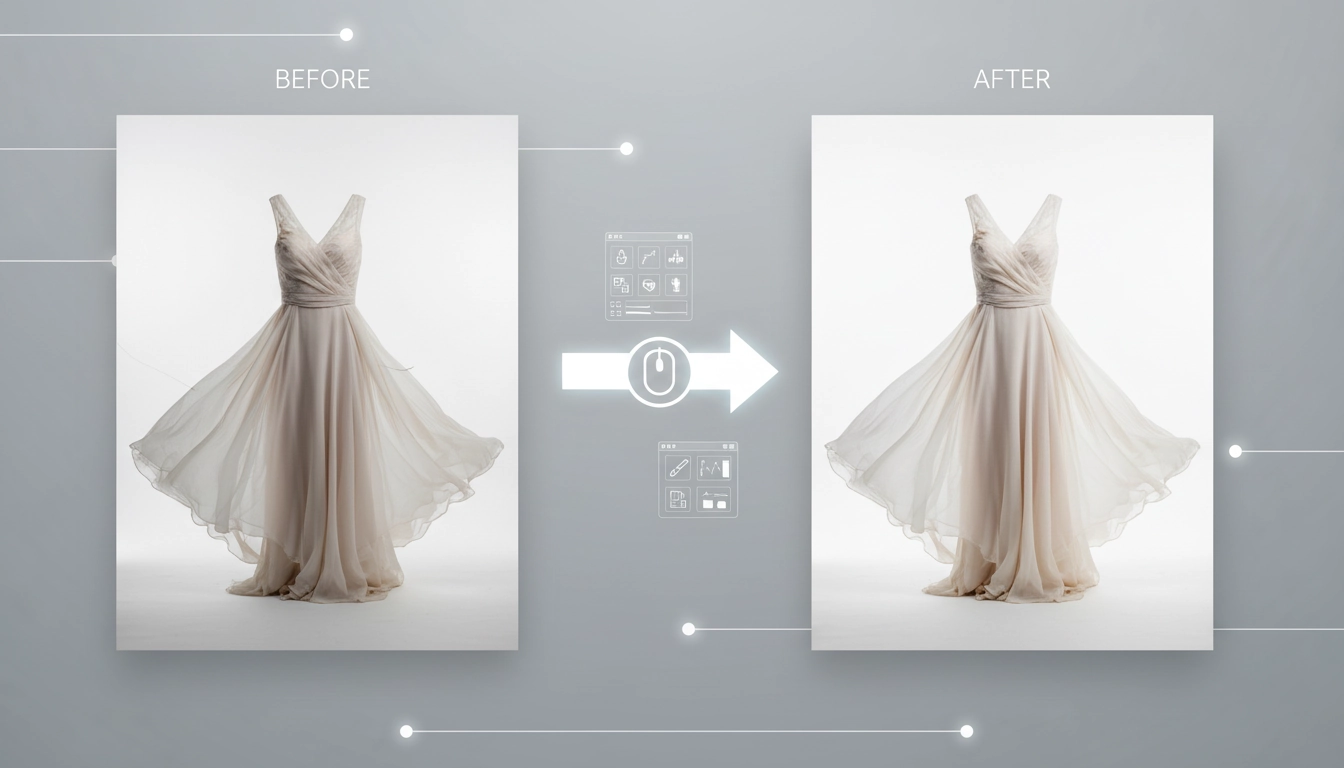
Raw images rarely go directly to eCommerce websites. They need more or less post-production services.
Professional product photo editing includes:
- background removal
- color correction
- wrinkle removal
- shadow creation
- ghost mannequin effect
High-quality product images can increase conversion rates by 30–94%, highlighting the importance of professional retouching.
Photo editing ensures visual consistency across the catalog.
Clothing Photography Workflow for Large eCommerce Brands
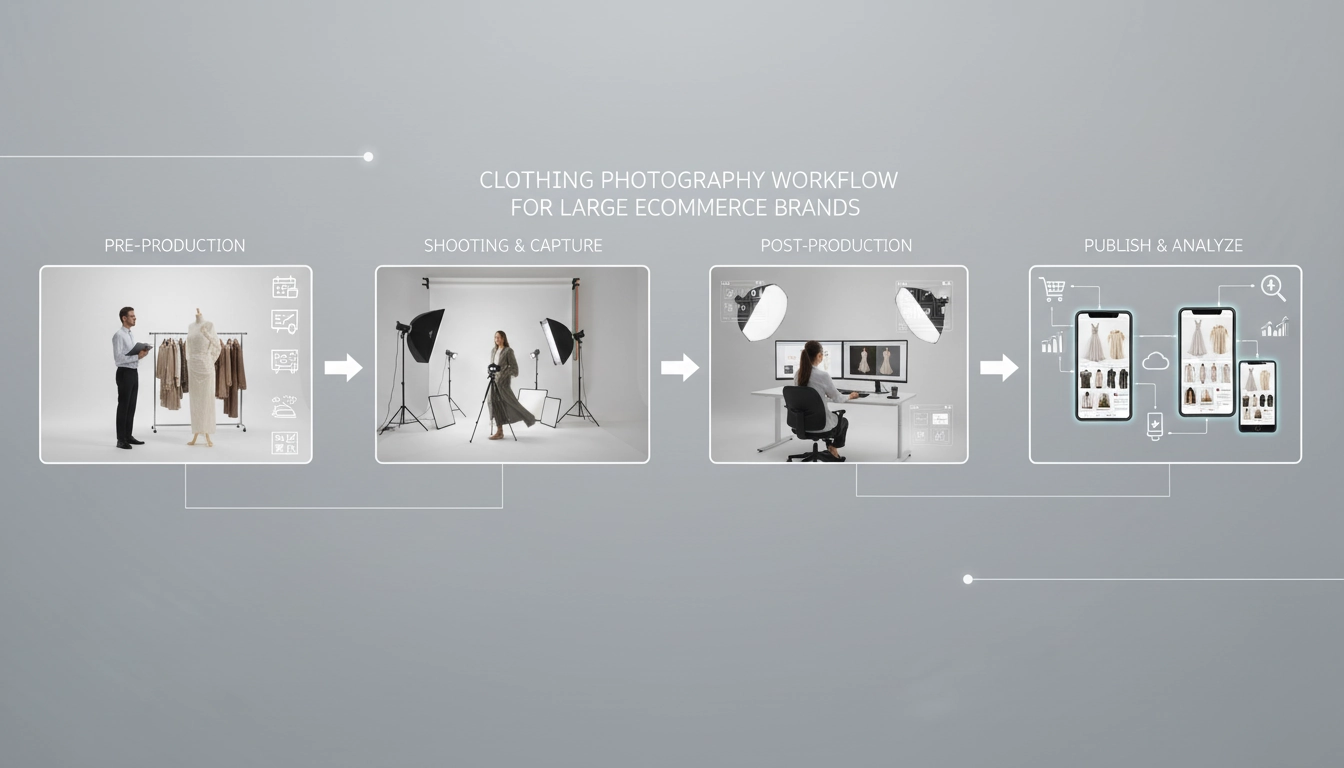
High-volume brands follow structured workflows.
Typical production workflow
Product preparation
↓
Photography setup
↓
Shooting multiple angles
↓
Image selection
↓
Retouching
↓
Quality control
↓
Upload to product page
Some brands process thousands of product images monthly to maintain large catalogs or product listings.
Modern AI tools now allow companies to generate multiple visual variations from a single source image, dramatically speeding up workflows.
Example Conversion Impact of Photography Improvements
Below is a simplified representation of how photography improvements affect conversion rates.
| Visual Improvement | Conversion Impact |
| Multiple product images | +40% |
| Professional photos | +33% |
| 360-degree images | +22% |
| Larger product images | +63% |
Trends in Fashion eCommerce Photography
Clothing photography continues to evolve.
Major trends shaping the industry
AI-generated product images
Brands can generate product variations instantly.
3D product photography
Interactive product visualization is growing rapidly.
Virtual try-on technology
AI allows customers to preview clothing on digital avatars.
Automation in photo editing
AI retouching tools dramatically reduce editing time and costs.
Final Thoughts
Clothing photography is one of the most powerful tools in fashion eCommerce.
It determines:
- first impressions
- customer trust
- product perception
- conversion rates
- return rates
In eCommerce platforms where the average conversion rate is barely around 2-3%, even small improvements in product images can have a massive impact on revenue.
The successful fashion brands invest heavily in professional photography, consistent styling, and scalable image editing workflows.
Because in eCommerce, customers cannot touch the product. They can only see it. And what they see determines whether they buy.