‘Halalize’ This Shot: The Compliance Playbook for the Middle East Market
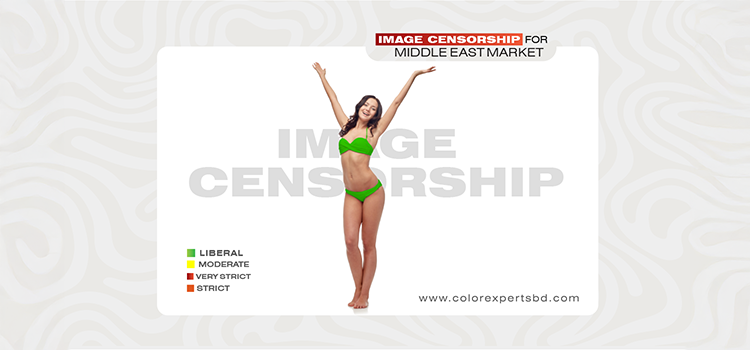
If you shoot or edit commercial imagery for global brands, there is a good chance that your files will be reviewed, scrutinized, and censored far beyond the markets for which they are intended. Photographers, retouchers, and creative directors are bound to comply and modify their methods due to the complicated and diverse media regulations in the Middle East Market. It’s a lot to manage. Beyond just organizing a photo shoot, creative teams must handle the entire process of preparing photos for global advertising, ensuring they are suitable for every nation and platform.
The regulations governing public and social media advertising have recently been clarified and occasionally tightened by regulators of the Middle East Nations. For example, anyone posting promotional content on social media now needs a specific Advertiser Permit, as the UAE’s media regulator has established new National Media Content Standards. Saudi Arabia’s media regulator continues to enforce national content standards and a licensing regime for paid social promotions. Meanwhile, Iran, in a 2022 order, still prohibits women from appearing in advertising. Together, these shifts are prompting creative teams to view “modesty-compliant localization”, or in other terms “Halalization”, as a repeatable step in their production workflow, rather than an exception.
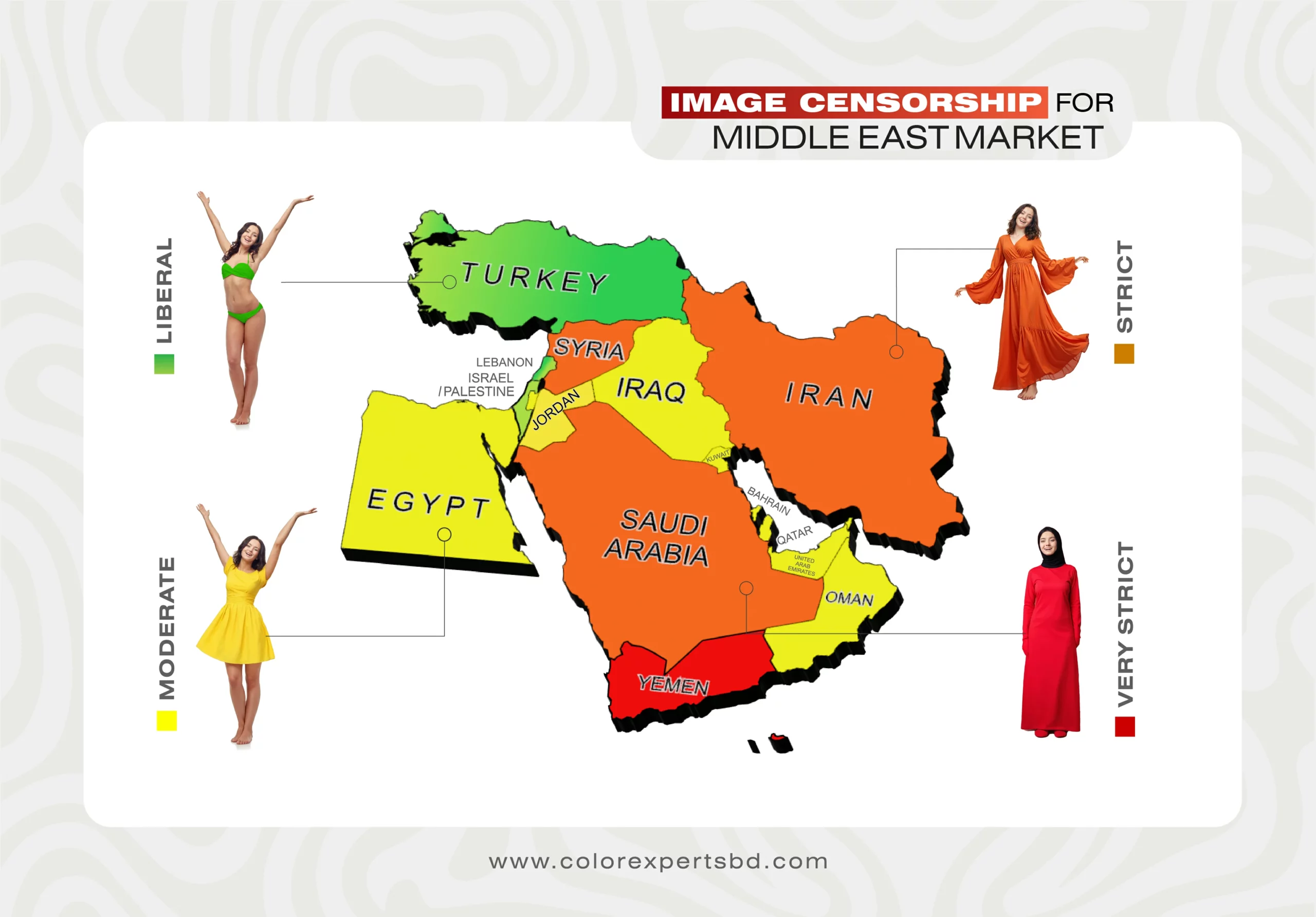
Infographic Credit: Color Experts International
The map above summarizes image-censorship norms across the Middle East. It’s intentionally simplified for quick orientation, but situations may vary in real life. For example, the UAE might be tagged ‘liberal”, but they are ‘very strict’ for public billboards, yet a conservatively styled fashion image can still run on indoor mall screens or in magazines after pre-clearance. Please check for local law in your target country. Please note that medium, placement, and city rules can change outcomes.
Liberal (Green): In this regard, Israel and Turkey can be considered to be relatively liberal and they normally permit advertisements that feature women without the images undergoing intense censorship. There are numerous instances where even the use of swimwear or bikini pictures does not cause the imposition of significant legal limitations or the carrying out of enforcement.
Moderate (Yellow): Bahrain, Egypt, Lebanon, Jordan, and the UAE tend to sit in the middle. While they are Muslim-majority markets, advertising image censorship is usually applied with more flexibility than in stricter countries, and enforcement can vary by platform and context. Bikini-style imagery is often risky, but ads featuring women in modest clothing are typically acceptable.
Strict (Orange): Iraq, Kuwait, Saudi Arabia, Oman, Qatar, Syria, and the Palestinian Territories are strict in following Islamic culture and have laws not to present women in advertisements in short dresses with odd poses. Islamic Shariah laws do not permit exposing women’s body parts, and these countries maintain it. They punish those who break the law.
Very Strict (Red): Iran and Yemen, according to current laws, fall into “very strict” countries. Iran currently forbids women from appearing in domestic advertisements, so depictions of women in any capacity, regardless of their attire, are typically not acceptable. Yemen on the other hand, enforces strict, locally regulated permitting regulations and very conservative public advertising standards.
The current regulator landscape in a nutshell
United Arab Emirates (UAE)
The Media Regulatory Office (MRO) monitors all the advertising whether they are following the national Media Content Standards. Regardless of whether the post is sponsored or not, the UAE Media Council launched a new Advertiser Permit in the middle of 2025 for anyone advertising products or services on social media. Because of this modification, regulators are now directly monitoring social media campaigns and sponsored content.
Iran
In July 2022, the Ministry of Culture and Islamic Guidance (MCIG), citing Islamic rules on women’s dress and work permits, directed advertising agencies and media outlets to stop featuring women in advertisements. For domestic campaigns, this significantly impacts the creative brief and planning process.
Lebanon
Lebanon is more liberal compared to some other countries in the Middle East. General Security (GS) must censor all media- movies and outdoor advertisements. But this process is sometimes unpredictable.
Qatar
Qatar’s outdoor/non-digital advertising regulations were updated in 2025. They set stricter location guidelines and higher fines. This emphasizes the importance of an advertisement’s media and placement in the process of photo halalization, in addition to its substance.
General Principles
Image censorship rules in the Middle East don’t give exact “dos and don’ts” on what might be displayed in the advertisement. Rather, these rules are set on general ideas: decency, public morals, popular norms, and more. It also depends on the setting of the advertisement areas, whether they are public or family-friendly. The creative choices and adjustments required for commercial photos are ultimately guided by these broad ideas.
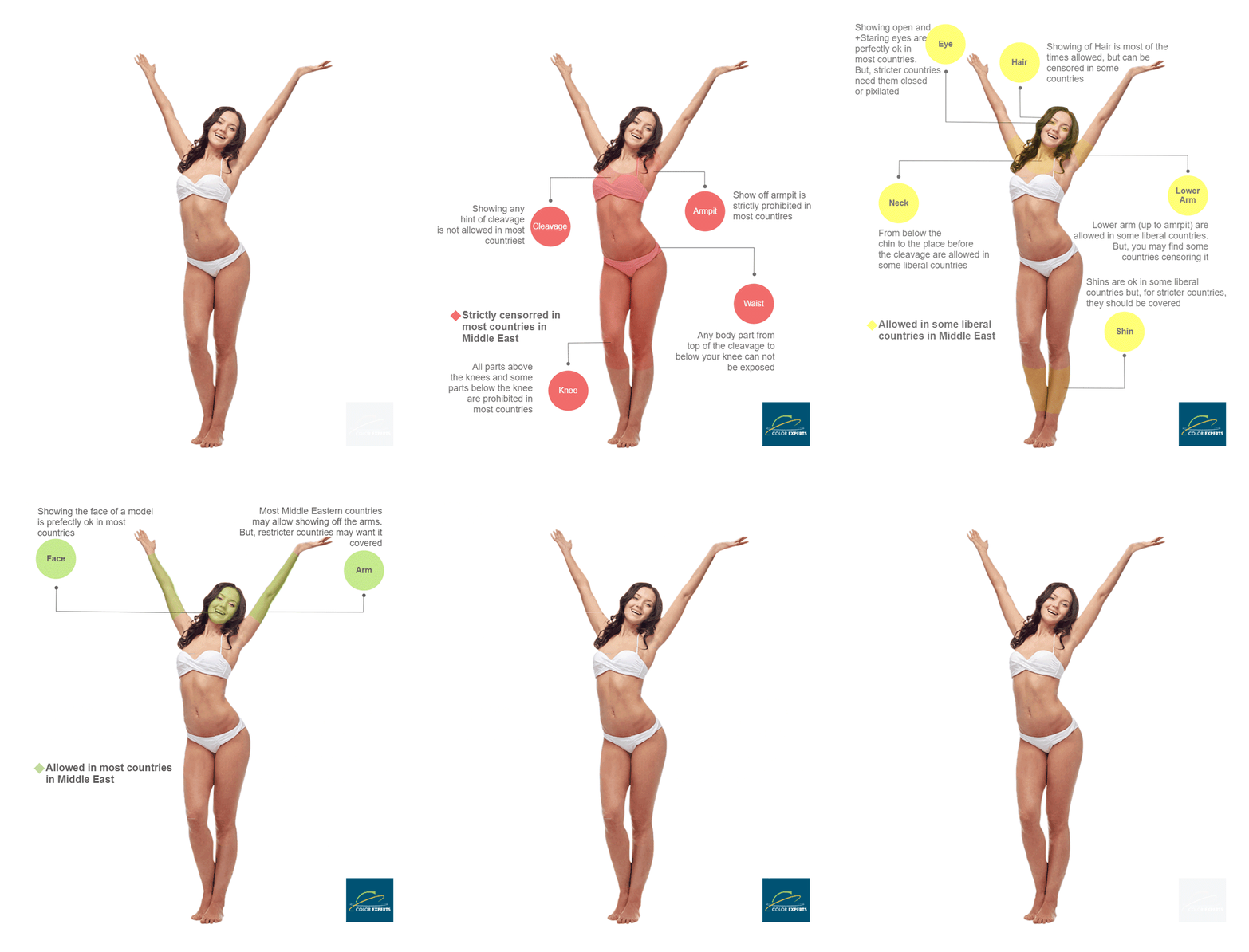
Infographic Credit: Color Experts International
See the interactive Infographic at https://www.colorexpertsbd.com/photo_halalization/
The infographic shows the categories of different parts of the female body. Due to the cultural and media censorship norms in some of the countries of the Middle East, showing bikini models is prohibited in advertisements. The image suggests a spectrum of acceptance – from entirely permissible (green) to strictly censored (red), with moderate (yellow and light-green) options in between.
Advertisers can display the women’s body parts highlighted in deep green, but they cannot keep open the red-indicated portions in most Middle Eastern countries. Some countries are liberal and moderate, and advertisers can expose women’s body parts.
Tap on body areas and see where public-ad needs compliance edits (cleavage, upper arm/armpit, above-knee, sheer fabrics) across the media (outdoor vs. digital). However, it is a guide, not a rulebook – the indicated requirements may vary by culture, religion, country, and placement, so it is recommended to check the local regulator before publishing digital or non-digital ads.
How to Comply or “Halalize”?
The following checklists will guide you (photographers and photo editors) on how to comply with or halalize photographs with the Middle East market according to the Islamic cultural guidelines.
1) Five-Move Quick Start (use on every job)
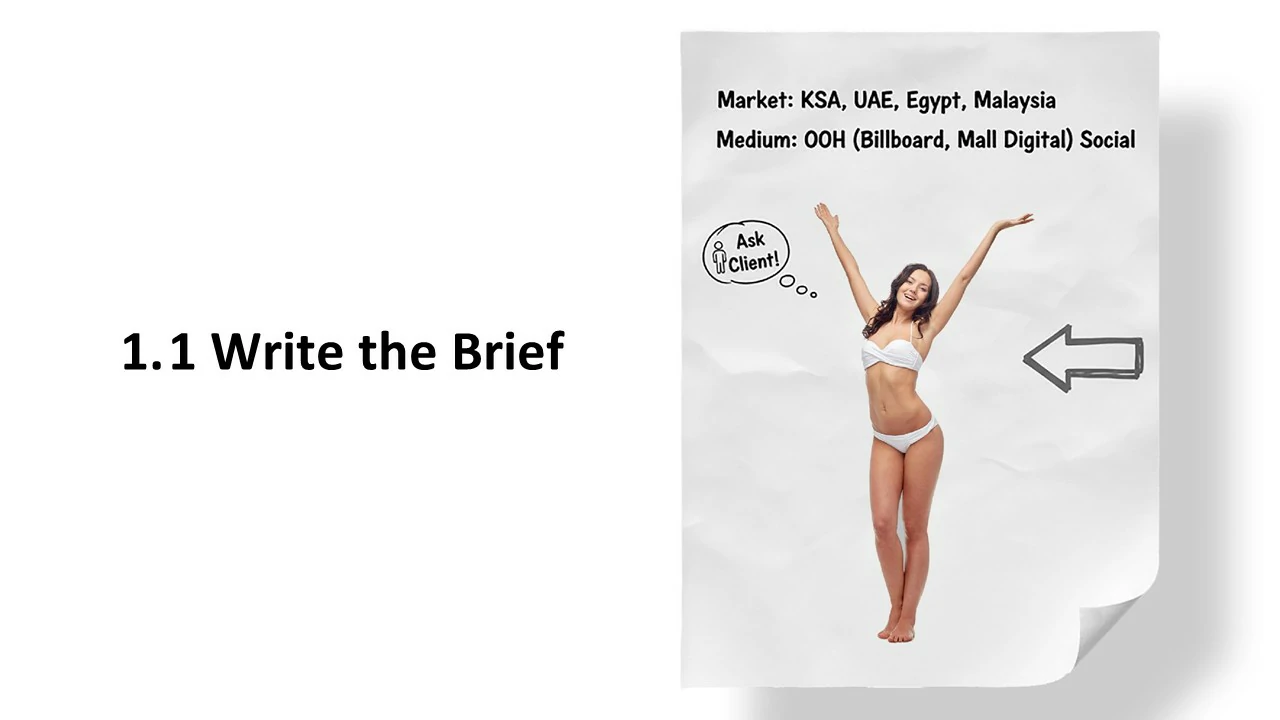
- Write the brief by market + medium. List target countries and placements (billboard, mall digital, social) or ask for a brief from your marketing manager or client before the shoot.
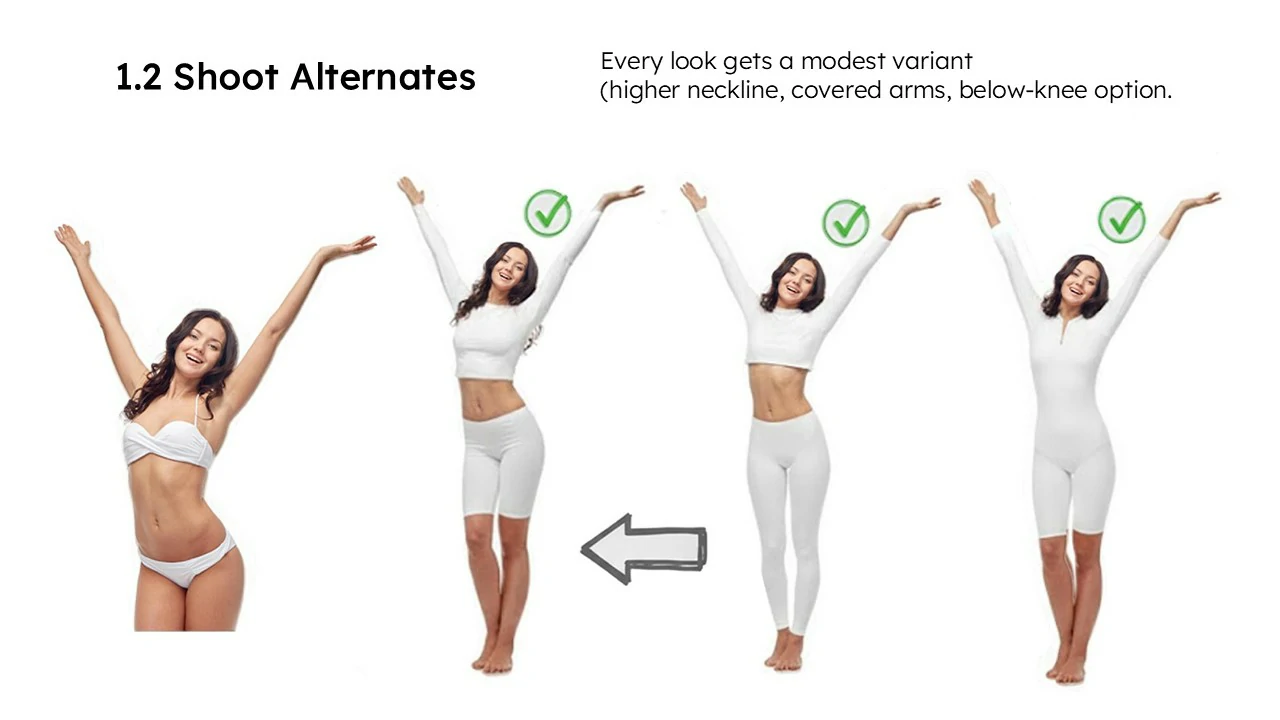
- Shoot alternates. Every look gets a modest variant (higher neckline, covered arms, below-knee option).
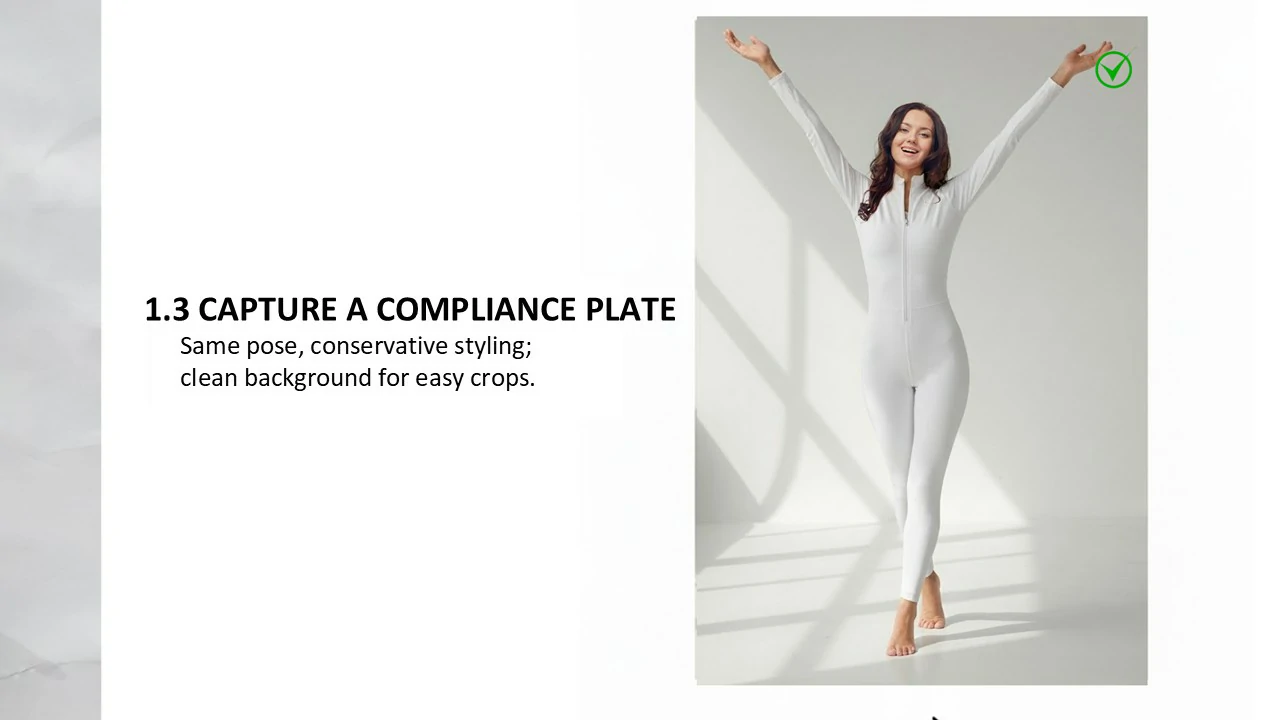
- Capture a compliance plate. Same pose, conservative styling; clean background for easy crops.
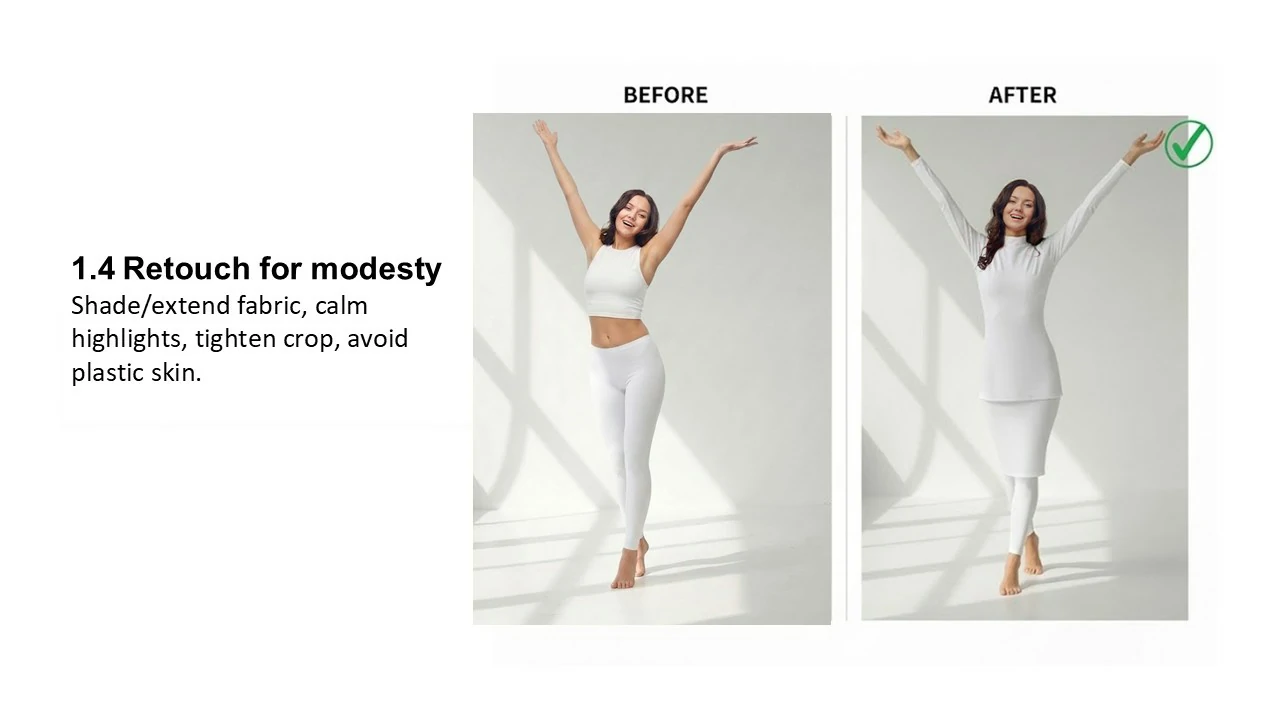
- Retouch for modesty, not realism drift. Shade/extend fabric, calm highlights, tighten crop, avoid plastic skin.
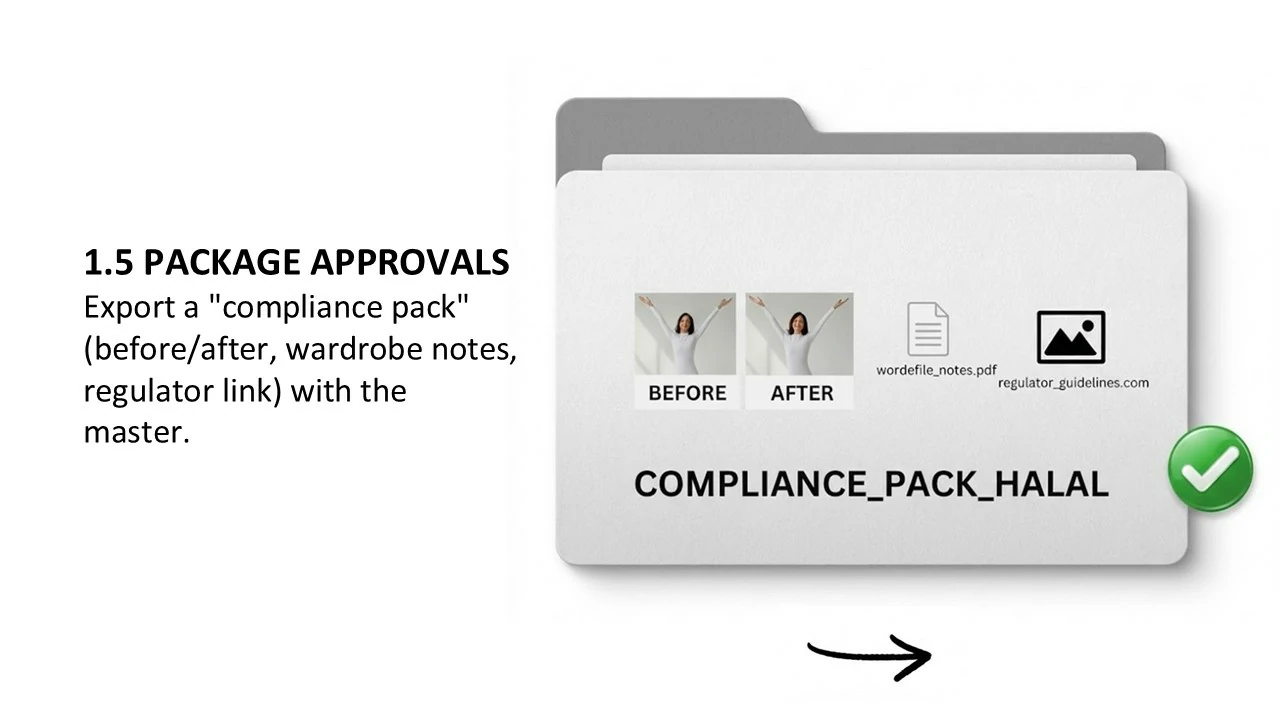
- Package approvals. Export a “compliance pack” (before/after, wardrobe notes, regulator link) with the master.
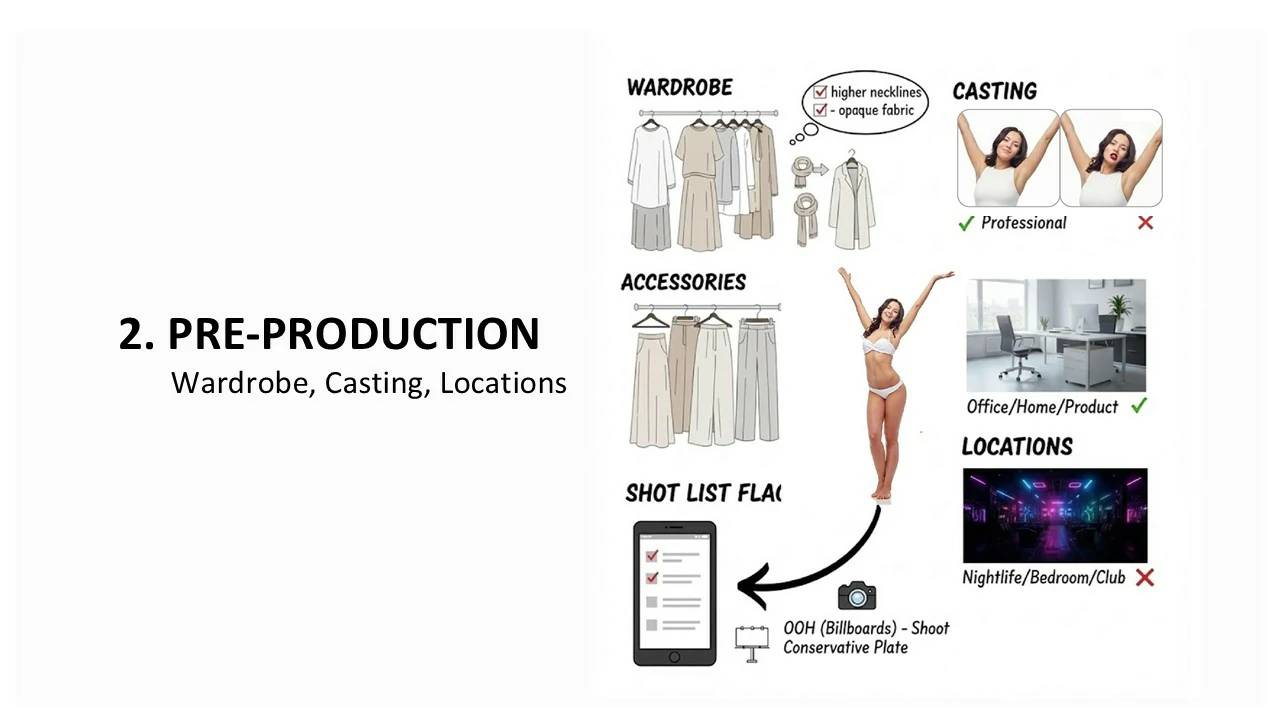
2) Pre-Production (Wardrobe, Casting, Locations)
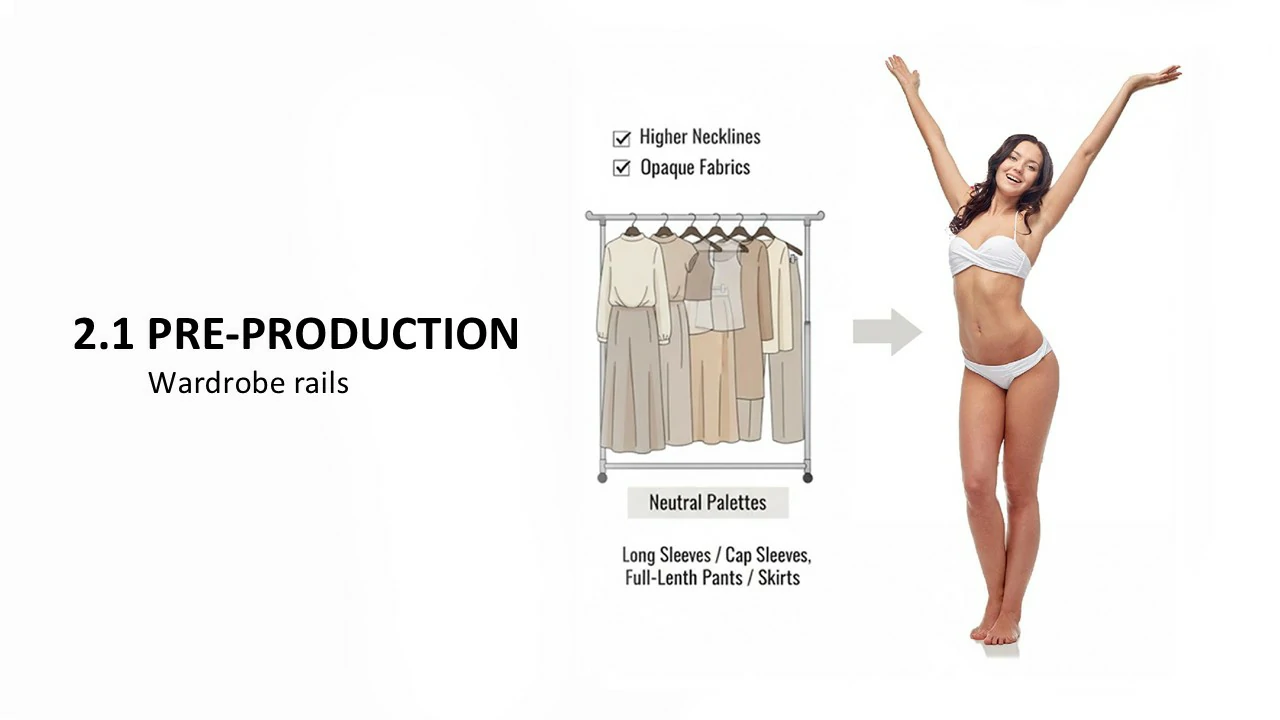
- Wardrobe rails: long sleeves/cap sleeves, full-length pants/skirts, higher necklines, opaque duplicates of sheer looks, neutral palettes.
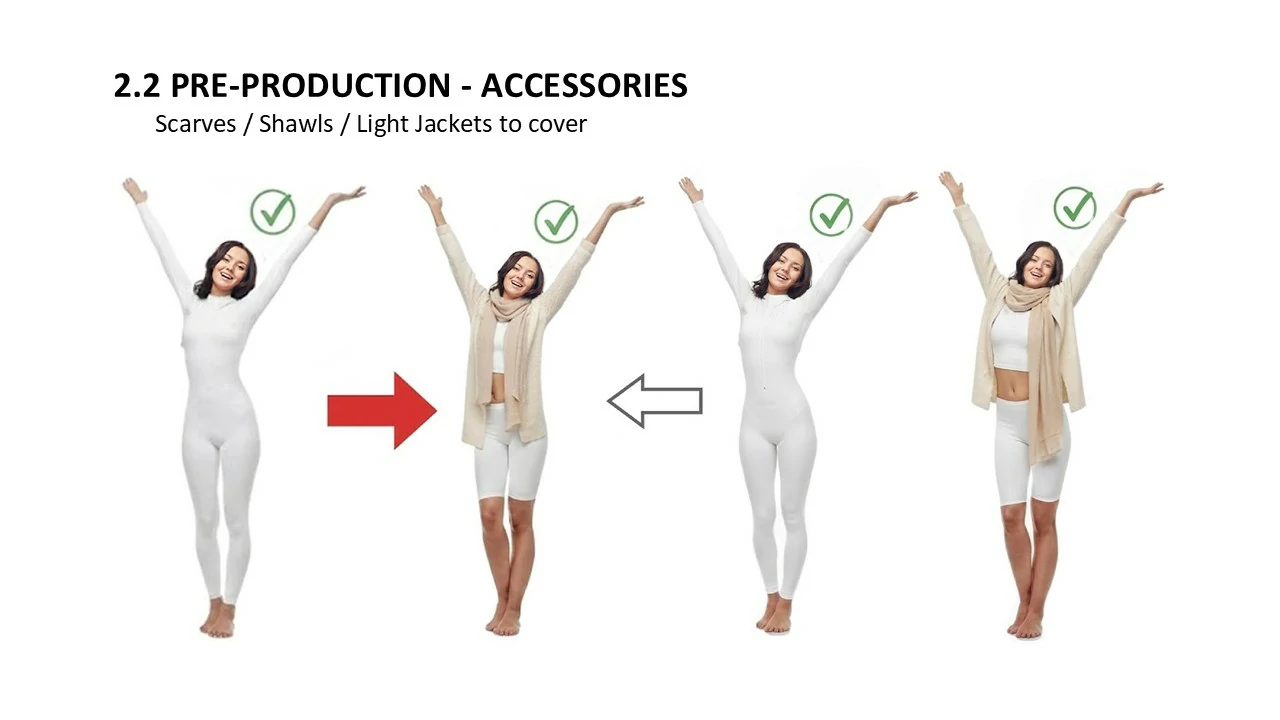
- Accessories: scarves/shawls/light jackets to add coverage without changing the brand look.
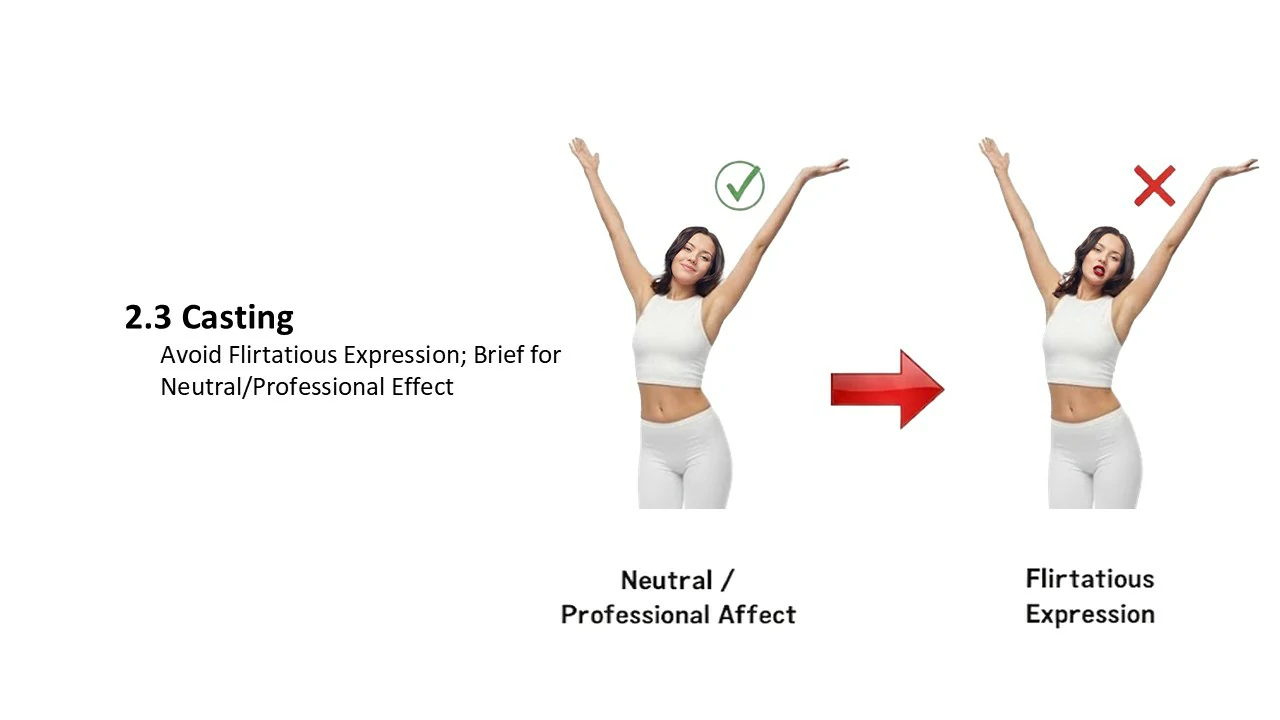
- Casting brief: avoid requiring flirtatious expression; brief for neutral/professional affect.
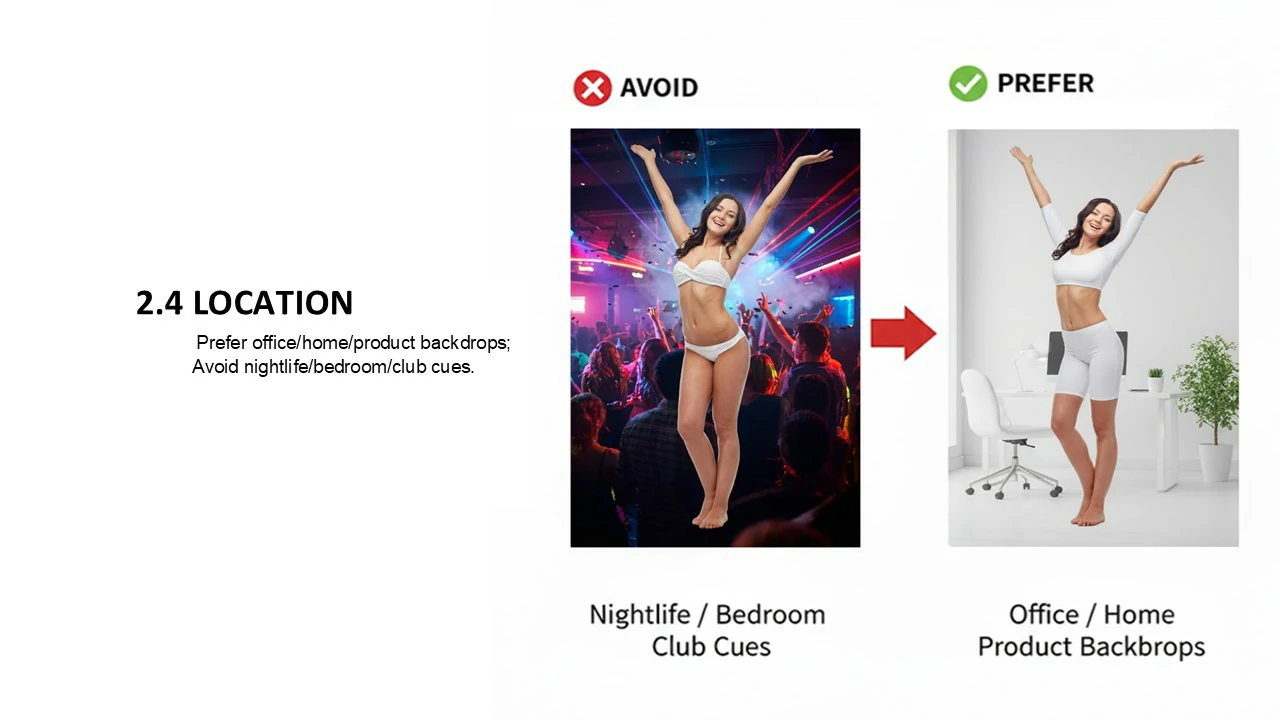
- Locations: prefer office/home/product backdrops; avoid nightlife/bedroom/club cues.
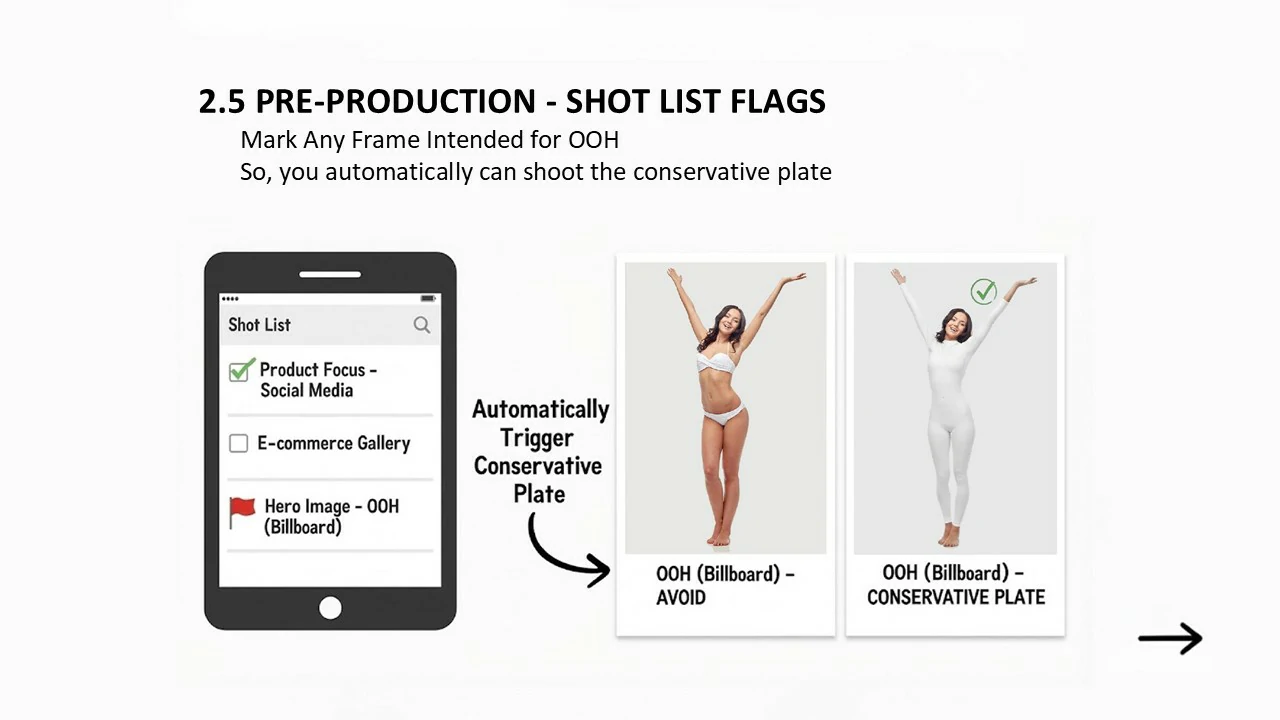
- Shot list flags: mark any frame intended for OOH so you automatically shoot the conservative plate.
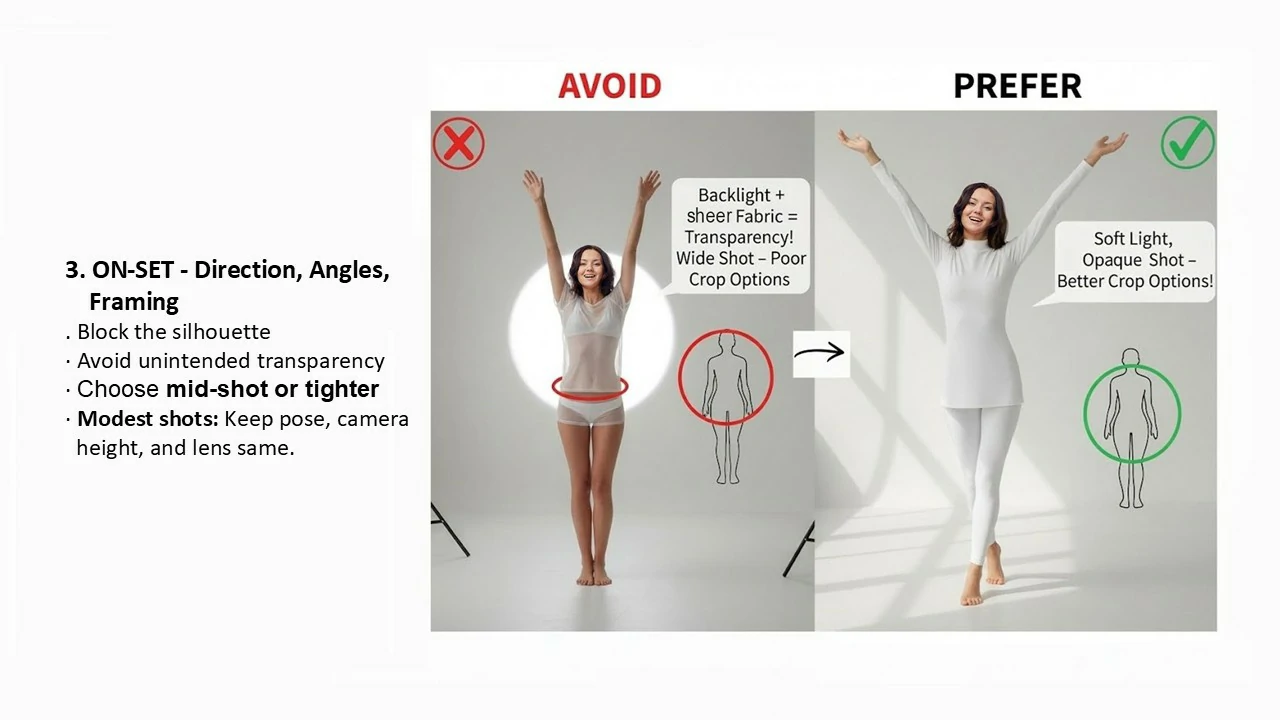
3) On-Set (Direction, Angles, Framing)
- Block the silhouette. Avoid poses that accentuate curves for OOH variants.
- Angle/lighting: backlight + thin textiles = unintended transparency on billboards; test on set.
- Framing rules of thumb: mid-shot or tighter when unsure; keep horizon and crop options for later.
- Continuity note: when you capture the modest plate, replicate pose, camera height, and lens to ease post.
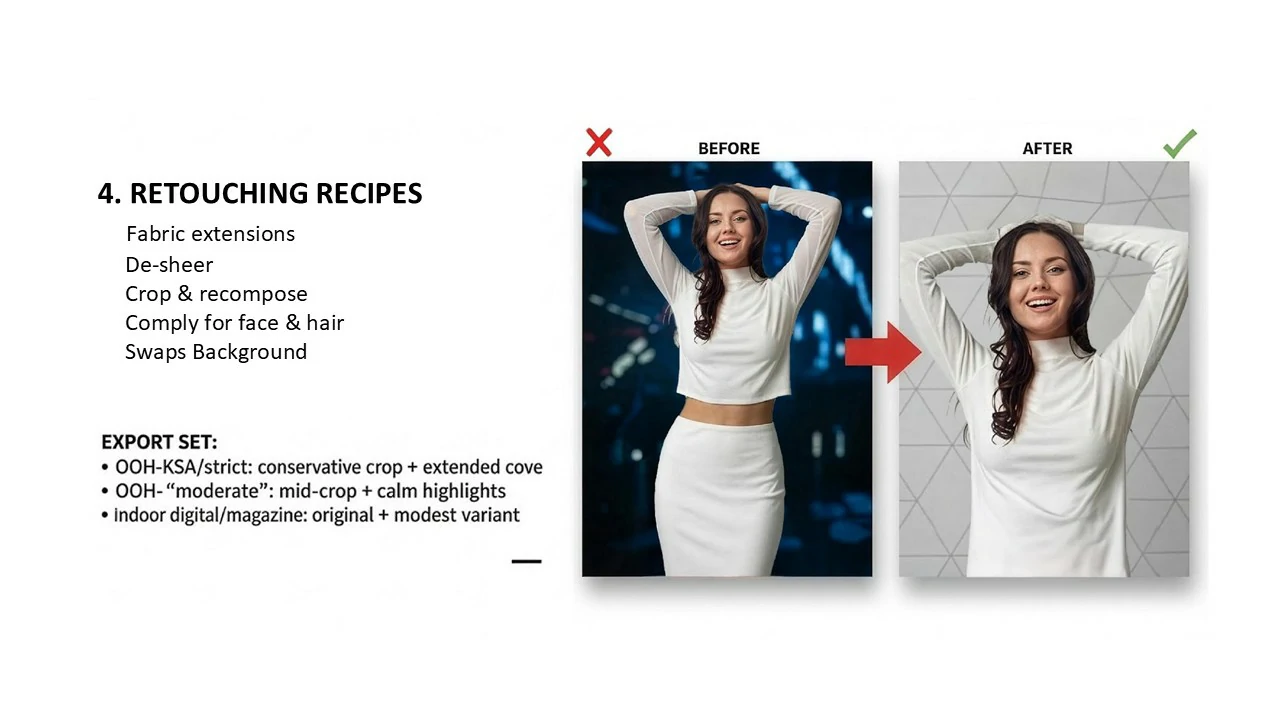
4) Retouching Recipes (Repeatable Steps)
- Fabric extensions: extend sleeves/necklines/skirts with sampled textures; preserve grain/fold direction.
- De-sheer: local exposure down, reduce speculars, add subtle fabric noise; avoid “painted” look.
- Crop & recompose: lift frame to remove cleavage/above-knee; keep brand/pack shot dominant.
- Face & hair: generally fine outside Iran; keep styling non-suggestive for OOH variants.
- Background swaps: replace figurative/backlit art with neutral or geometric patterns when needed.
- Export set:
- OOH-KSA/strict: conservative crop + extended coverage
- OOH-“moderate”: mid-crop + calm highlights
- Indoor digital/magazine: original + modest variant
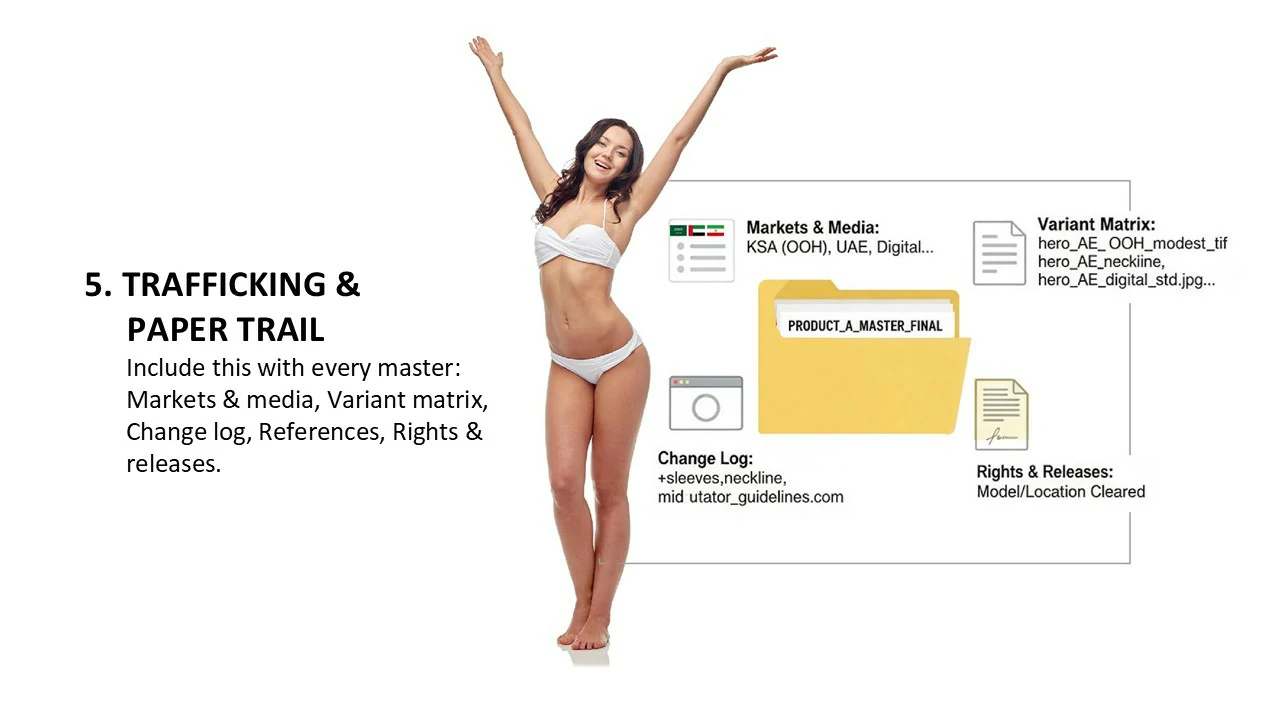
5) Trafficking & Paper Trail (what your producer needs)
Include this with every master:
- Markets & media: list of countries + placement types.
- Variant matrix: filenames mapping (e.g., hero_AE_OOH_modest.tif, hero_AE_digital_std.jpg).
- Change log: bullet list of edits (e.g., “extended sleeves +18px; neckline +12px; crop to mid-torso”).
- References: link to current regulator/owner guidance used to decide edits.
- Rights & releases: model/location cleared for edited use; no implied endorsement if posture changed.
6) DO / DON’T (the stuff that saves time)
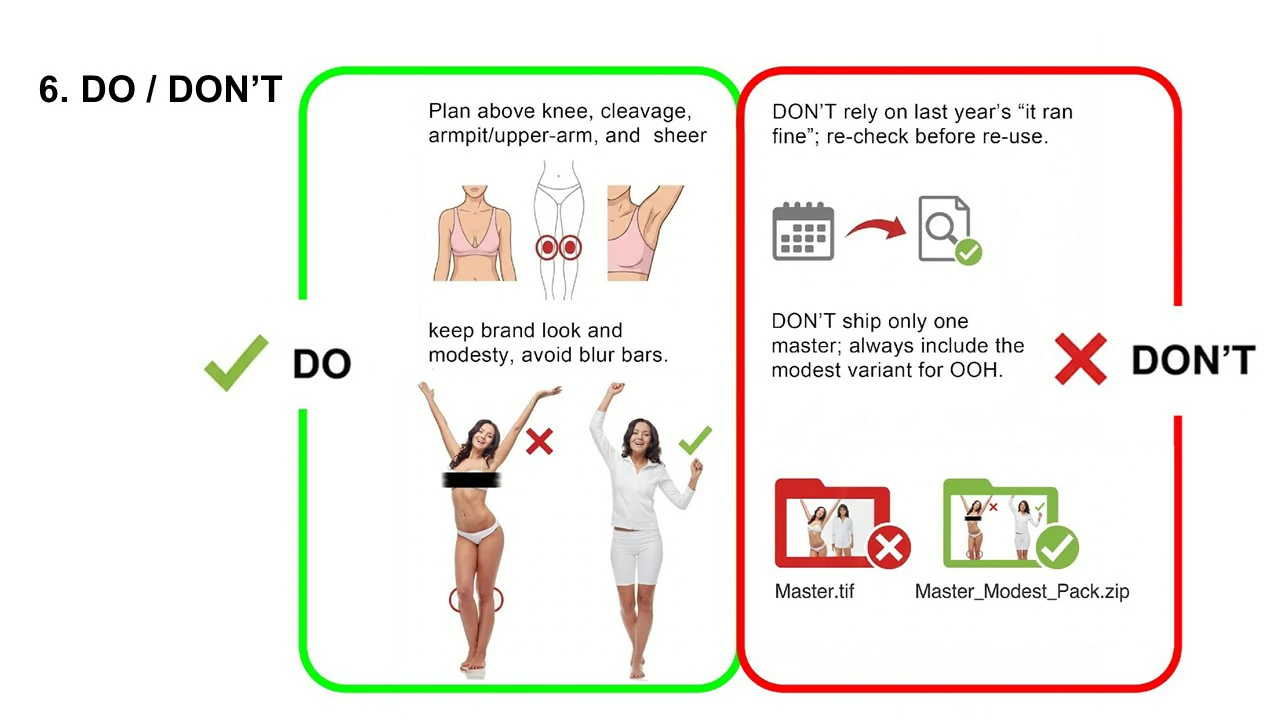
- DO plan above-knee, cleavage, armpit/upper-arm, sheer as your four risk areas.
- DO keep the brand look—modesty ≠ bland; use styling and composition, not blur bars.
- DON’T rely on last year’s “it ran fine”; re-check before re-use.
- DON’T ship only one master; always include the modest variant for OOH.
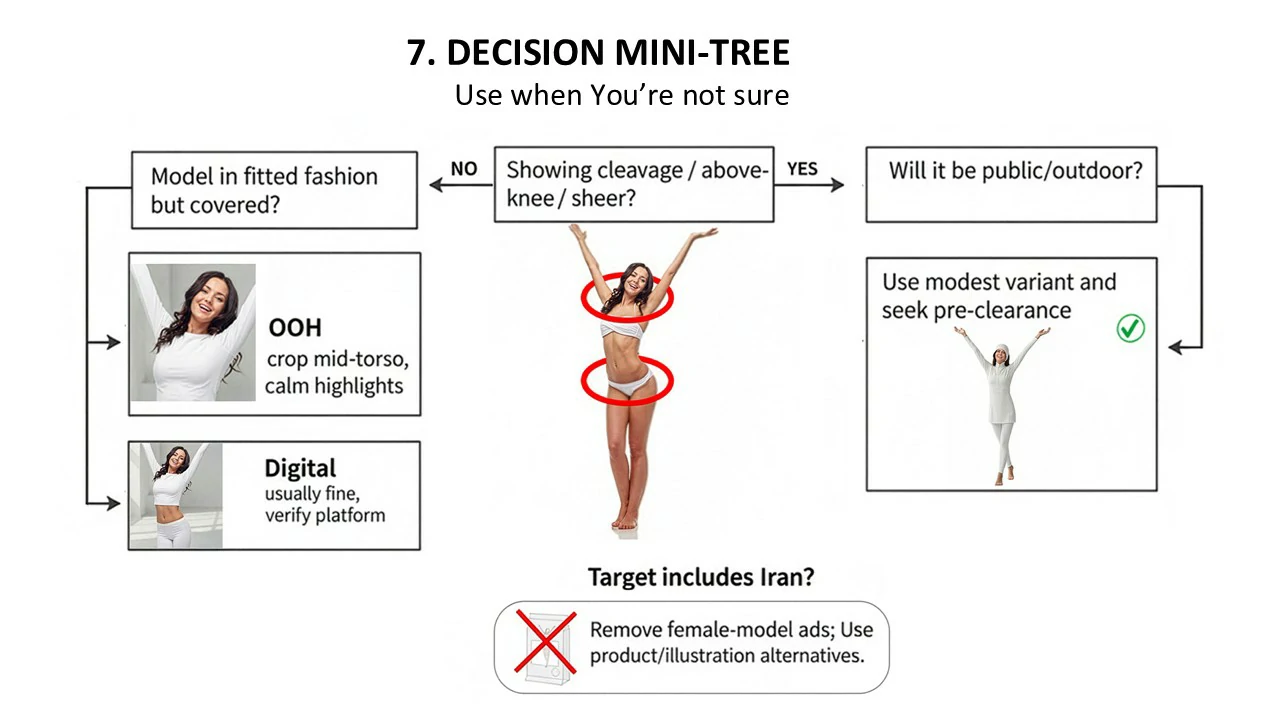
7) Decision Mini-Tree (use when you’re unsure)
- Showing cleavage / above-knee / sheer? → Yes → Will it be public/outdoor? → Yes → Use modest variant and seek pre-clearance.
- Model in fitted fashion but covered? → OOH: crop mid-torso, calm highlights; Digital: usually fine, verify platform.
- Target includes Iran? → Remove female-model ads from domestic placements; use product/illustration/editorial alternatives.
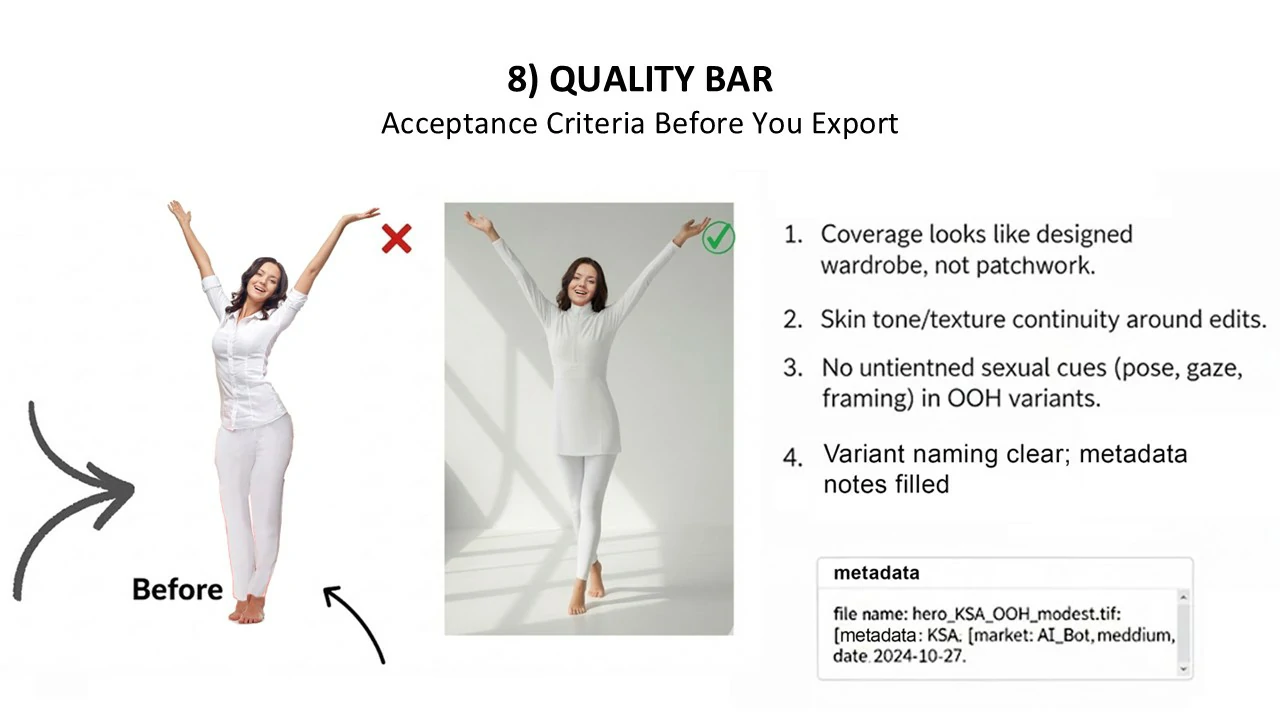
8) Quality Bar (acceptance criteria before you export)
- Coverage looks like designed wardrobe, not patchwork.
- Skin tone/texture continuity preserved around edits.
- No unintended sexual cues (pose, gaze, framing) in OOH variants.
- Variant naming clear; metadata notes filled (market, medium, editor, date).
Wardrobe Checklist (Pre Photography)
Model must prioritize modesty and cultural respect. Sleeves and trousers/ pants or skirts should be of full length. Shoulders, chest, back, midriff, and legs should not be exposed. The photographers should avoid the use of sheer and transparent fabrics, tight body, hugging silhouettes for their female models. Try to opt for clean lines and relaxed fits so that they do not accentuate body contours. These choices align with regional media content standards and decency expectations. The regulators in the UAE and across the GCC recommend these.
Color, Fabric & Texture
Photographers should select neutral tones for stone, sand, olive, navy, and charcoal and avoid flashy and suggestive palettes. Matte or opaque fabrics like cotton, twill, crepe, suiting wool, matte jersey, etc. can reduce glossy and satiny finishes. They can look sensual under lights. Try to skip sheer mesh, lace panels, and visible undergarment outlines. The fabrics with long, unbroken color blocks are safer than high-contrast paneling, because they may highlights curve. (General GCC modesty norms reflected in official and sector guidance.)
Layering & Coverage Toolkit
Think in layers, but do not think in bulk. The goal is to add coverage without touching the brand’s identity. Reach for lightweight blazers, shackets, longline cardigans, kimono or abaya-style overlays, and simple scarves or shawls. A clean undershirt like crew neck or mock neck can quietly do a lot of work. Always keep nude camisoles or slips on hand to cut transparency once studio lights come on. And in hotter Gulf climates, choose breathable layering like cotton voile, Tencel, or bamboo. They keep talent comfortable on set while still delivering the coverage you need, no compromises.
Hair, Makeup & Grooming
Hair can be visible in many markets; keep it neat, non-sensational, and away from the face if needed. Avoid highly glamorous looks, wet hair effects, or provocative styling. Favor natural, soft-matte makeup and subdued lip tones; avoid “nightlife” glam. Be mindful that some shoots (e.g., government/health sectors) may prefer more conservative presentations.
Accessories, Logos & Jewelry
Minimal, tasteful accessories are safest. Avoid oversized statement jewelry, slogans, or iconography that could be construed as offensive or political. Be conservative with brand placement and avoid chest-level text that draws attention to body contours. (Common compliance guidance across Gulf regulators.)
Men’s Wardrobe Notes
No sleeveless tops; avoid shorts above the knee; keep fit relaxed and opaque. Collared shirts, long pants, and closed shoes are safe defaults. These align with public decency expectations that several GCC states have publicly communicated.
Sector-Specific Scenarios
Sports/Activewear: Opt for long-sleeve tops, full-length bottoms, and higher necklines; use base layers under team kits when needed. Modest sportswear is a fast-growing category; major brands localize fits and coverage for Gulf markets—use these lines where possible.
Swimwear/Beach: Use modest swim options (full-coverage suits/rash guards); avoid mixed-gender scenes that feel sensual; confirm location policies in advance. (Market and regulatory sensitivity varies; when in doubt, over-comply.)
Health/Government/Financial Ads: These sectors typically apply stricter propriety standards—keep looks ultra-conservative and text/image claims compliant with ministry rules.
Posing, Blocking & Framing
Use poses that are neutral, confident, and professional—no suggestive arching, emphasis on hips/chest, or intimate touch between models. Favor seated or three-quarter standing poses with relaxed shoulders, hands visible, and minimal torso twisting that accentuates curves. Frame to de-emphasize body contours if outfits are borderline; longer lenses and straight-on angles help.
Photographers’ Checklist (During Photography)
Body exposure rules
- No exposure of shoulders, underarms, abdomen, lower back, thighs, or cleavage
- Only face, hands, and feet (in some regions) may remain visible
- Avoid showing body curves or highlighted shapes with tight clothing
Poses & expressions
- Avoid seductive or flirty poses
- Maintain neutral or professional facial expressions (no sensual expressions)
- Choose standing or sitting poses that do not accentuate body shape
Camera angles & framing
- Frame shots to avoid unnecessary focus on body contours
- Use mid-shot or close-up framing when unsure about lower-body compliance
- Ensure composition aligns with conservative cultural sensitivity
Concept & environment
- Avoid beachwear, bedroom, nightlife, or luxury club settings
- Use modest, neutral environments such as offices, homes, or product backgrounds
- Ensure the overall visual message reflects respect, modesty, and professionalism
Photo Editors’ Checklist (During Post-Production)
Clothing modifications
- Use Photoshop to add sleeves, extend necklines, and cover legs
- Apply fill colors, clone tools, and fabric overlays to hide exposed skin
- Add additional garments (jackets, abayas, long tops) if the original outfit is non-compliant
Skin coverage & retouching
- Remove visible cleavage, thighs, abdomen, armpits, or back exposure
- Hide any skin using digital cloth extensions or strategic objects like flowers, fabrics, or shadows
- Cover body curves that may appear overly defined due to tight clothing
Objectionable content removal
- Crop out or blur sensual body parts if editing is limited
- Replace models entirely if the image is too provocative for halal modification
- Avoid strong makeup or glossy skin effects that enhance sensual features
Adjustment & cropping
- Use close-up cropping, focusing on the face or product only
- Ensure cropped compositions do not imply any provocative context
- Remove any background elements that suggest nightlife, romance, or Western pop culture
Islamic cultural visual compliance
- Ensure the edited photo gives no sexual suggestion or attraction
- Choose conservative, respectful aesthetics that align with Middle Eastern audience expectations
- Ensure the final image passes both visual modesty tests and regional advertising guidelines
Impacts of Image Censorship on the Markets
With a combined population of over 60 million and a GDP of USD 2.3 trillion, the GCC is a significant market to agencies and brands alike. However, they must be aware of what works and what doesn't for this lucrative market.
Image censorship in Middle Eastern markets has a profound impact on advertising, shaping everything from creative direction to campaign execution. Brands and agencies must carefully navigate cultural, religious, and legal sensitivities to ensure compliance with modesty and public morality standards. This often limits the visual freedom found in Western advertising, restricting depictions of women, clothing styles, body exposure, and even gestures.
As a result, advertisers rely more on symbolism, product-focused visuals, and neutral design aesthetics instead of lifestyle or model-heavy imagery. Campaigns undergo multiple rounds of approval, localization, and editing before release, slowing production timelines and increasing costs.
However, this environment also pushes creative teams to become more strategic, crafting visually engaging, culturally respectful campaigns that connect with audiences while maintaining brand identity and legal conformity.
In short, image censorship doesn’t stop advertising; it transforms advertising into a more thoughtful, context-aware art.