Top 10 Video Editing Service Providers in 2026
Most brands are producing more video than ever. But most brands are also publishing average videos. And the average video doesn’t convert.
In 2026, video isn’t just “content.” It’s revenue, brand positioning, and authority. If your video looks sloppy, slow, over-edited, or generic, you lose trust instantly.
Here’s the problem: editing is the bottleneck. Filming is easier. AI tools are everywhere. Cameras are better than ever. But editing? That’s where quality lives or dies.
So instead of giving you a fluffy list, I’m going to break down the top 10 video editing service providers in 2026, who they’re actually good for, who should avoid them, and where they fit.
Let’s get into it.
Why Video Editing Matters More Than You Think
Before we jump into the list, here’s a reality check.
- Attention spans are shrinking.
- Platforms reward retention.
- Bad pacing kills watch time.
- Poor color grading kills credibility.
- Weak storytelling kills conversions.
Editing is not trimming clips. Editing is persuasion. If you’re running:
- eCommerce ads
- YouTube channels
- SaaS explainers
- Podcast repurposing
- Brand storytelling
Your editor isn’t just a technician. They’re your growth partner. Now let’s look at who actually delivers.
1. Color Experts International (CEI)
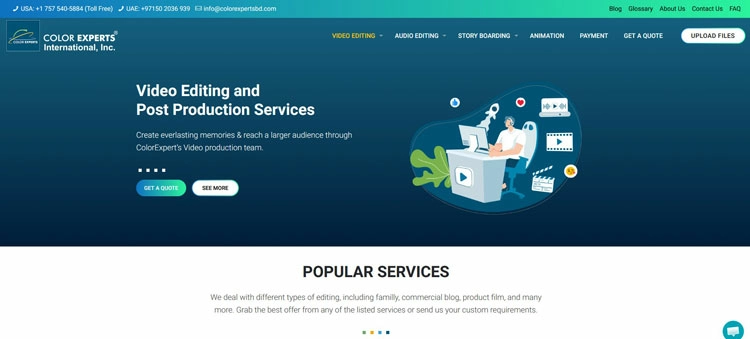
If you care about scale and consistency, this is where things get serious. Color Experts International (CEI) started as a global photo post-production powerhouse.
That matters. Why? Because companies that master high-volume visual workflows understand systems.
And systems are everything when you’re producing video at scale. Here’s what makes CEI different:
They don’t blindly chase AI hype. Instead, they use a hybrid model, AI-assisted workflow + experienced human editors. That’s the sweet spot in 2026.
Pure AI editing? Fast, but generic. Pure manual editing? Great, but slow. Hybrid? Scalable and controlled.
CEI handles:
- Commercial ad editing
- Social media video ads
- YouTube long-form content
- eCommerce product videos
- Professional color grading
- Noise reduction and enhancement
If you’re an agency with multiple clients or a brand producing hundreds of assets per month, CEI’s structured approach makes sense.
They aren’t a “random freelancer.” They’re a production engine.
Who should choose CEI? Agencies. eCommerce brands. Marketing teams with volume.
Who shouldn’t? Solo creators looking for cheap one-off edits.
2. Veed
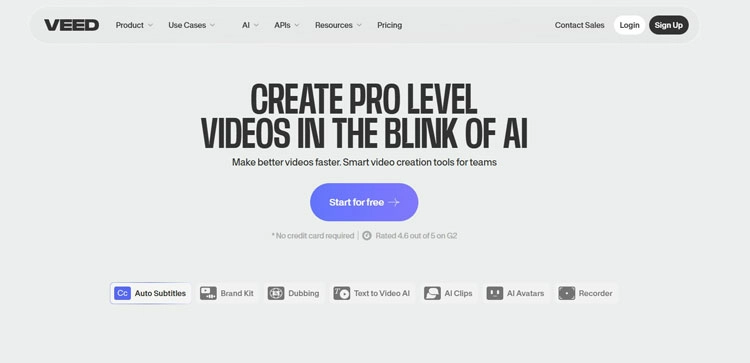
Let’s be clear. Veed is not an outsourcing company. It’s a tool. And it’s a good one — for what it is.
It’s fast. Browser-based. AI-powered. Great for captions and quick edits. You don’t need Premiere Pro. You don’t need heavy hardware.
But here’s the catch. Tools don’t replace creative judgment. If your content strategy depends on:
- Deep storytelling
- Emotional pacing
- Brand tone
- High-end commercial polish
Veed won’t magically fix that. It’s ideal for:
- Social teams
- Startups
- Internal marketers
It’s not ideal for serious production workflows.
3. Tasty Edits
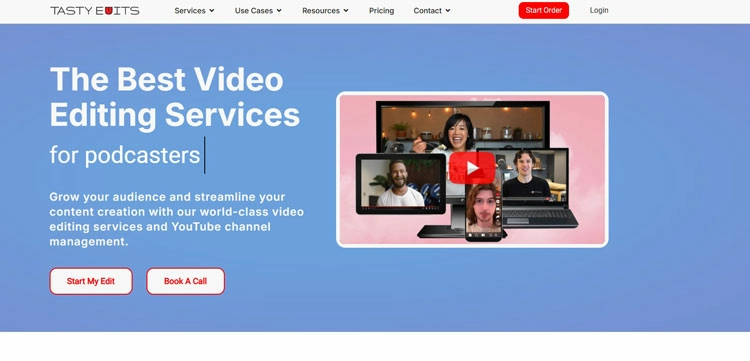
If YouTube is your business model, listen carefully. YouTube editing is different. It’s about retention. Hooks. Pattern interrupts. Zoom cuts. Emotional rhythm.
Tasty Edits understands that. They don’t just “clean up” footage. They edit for watch time.
If you’re a YouTuber who:
- Publishes weekly
- Tracks analytics
- Cares about CTR and retention curves
They’re worth considering.
But if you’re looking for cinematic ad production or brand storytelling, they’re not built for that.
They’re niche, and that’s a good thing.
4. Video Husky
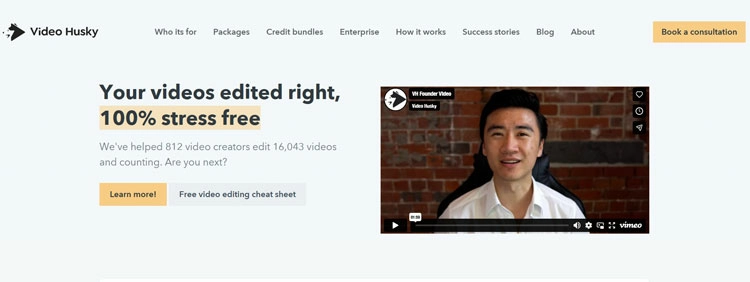
The subscription model of Video Husky sounds attractive. Pay monthly. Submit unlimited requests.
Predictable cost. Ongoing output. Here’s the reality. Quality depends on the editor assigned. And with subscription services, you’re trading boutique precision for process.
For simple marketing edits, it works. For high-end brand campaigns? Probably not.
If you value:
- Predictable pricing
- Ongoing moderate-quality edits
This can work. If you’re chasing cinematic excellence? Look elsewhere.
5. Motion Edits
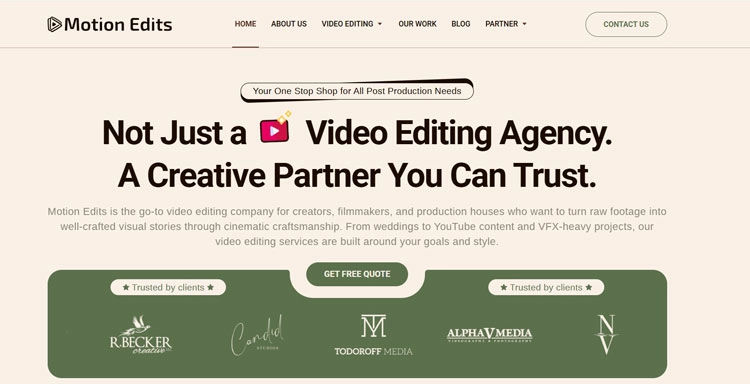
Motion graphics are a different beast.
If your video includes:
- SaaS dashboards
- Animated workflows
- Data visualizations
- Explainer graphics
You need motion specialists. Motion Edits focuses on animation and branded motion content. Clean, modern, technical.
They’re not a bulk editing partner. They’re a visual storytelling studio.
Best for tech and SaaS brands.
6. Yum Yum Videos
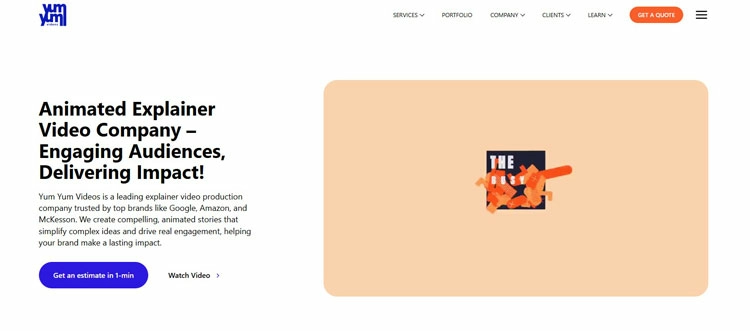
Yum Yum Videos delivers premium animated storytelling. That’s their lane. They handle:
- Script
- Storyboard
- Voiceover
- Full animation production
This isn’t fast content. It’s flagship content. If you’re building a major brand asset, it makes sense. If you need 30 videos per month, it doesn’t.
7. Vidchops
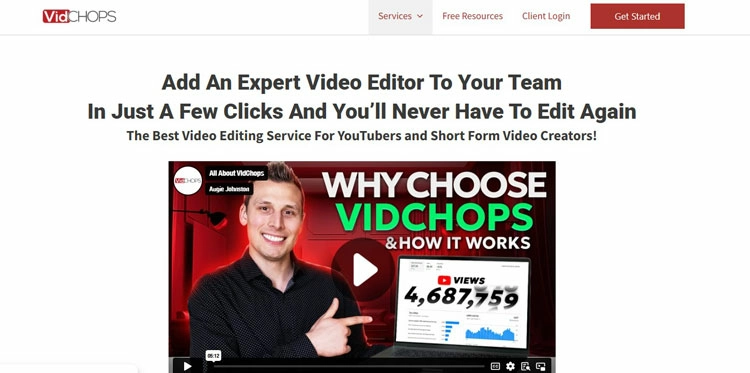
Content repurposing is big in 2026. You record one podcast. You extract:
- 10 short clips
- 5 reels
- 3 teaser ads
Vidchops specializes in that workflow. It’s practical. Not cinematic.
If you’re a podcaster or educator, this is efficient. If you’re producing brand ads? Probably not the best fit.
8. The DVI Group
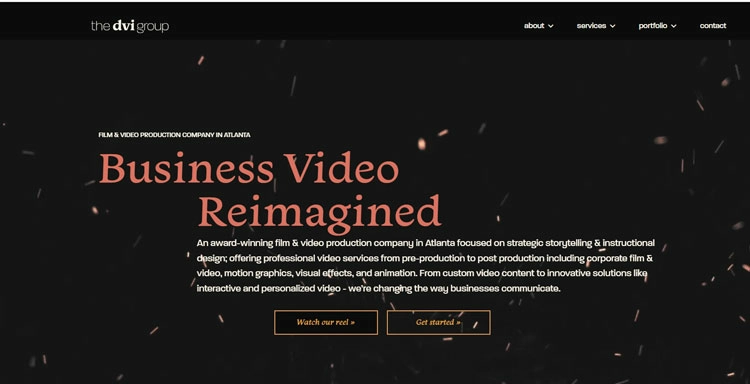
This is enterprise territory. Corporate messaging. Compliance. Executive storytelling.
DVI group often handles production + editing. If you’re a large organization that needs structure and reliability, this works.
If you’re a lean digital brand moving fast, it may feel heavy.
9. Fiverr Pro Video Editors
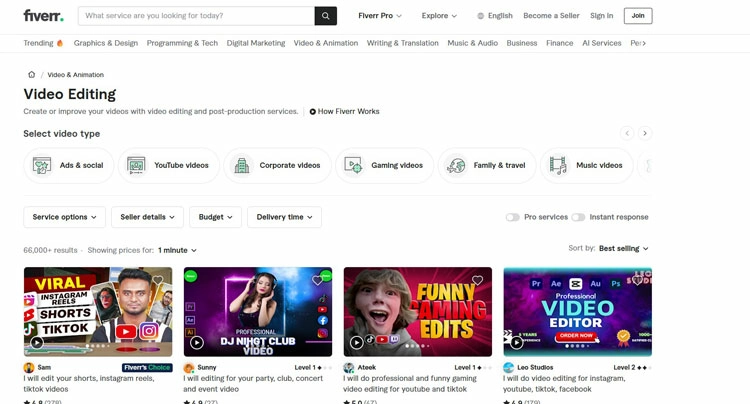
Here’s the truth about Fiverr Pro. You can find amazing talent. You can also waste weeks.
It’s marketplace-based. You manage communication. You vet quality. It’s flexible but inconsistent. Great for:
- One-off projects
- Specialized needs
Risky for:
- Ongoing brand workflows
10. Upwork Enterprise Video Services
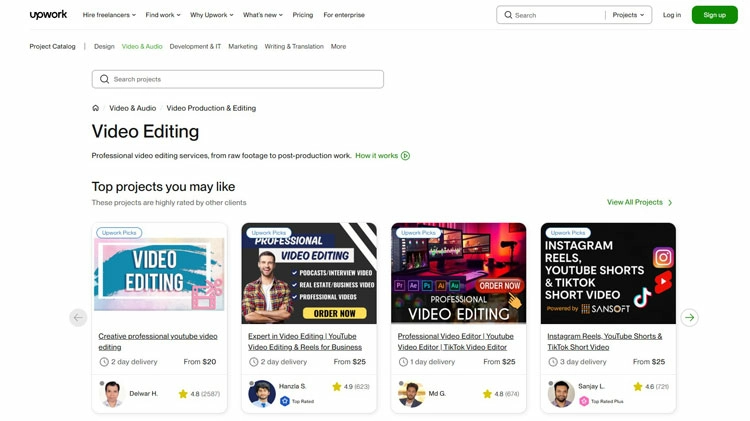
Upwork Enterprise is a staffing solution. Not a creative partner. You can assemble a team. But you manage them. If you have internal producers who can oversee freelancers, it works.
If you want a managed solution? It’s not that.
The Big Question: AI or Human?
Let’s address the elephant in the room. AI editing tools are exploding. But here’s the uncomfortable truth:
AI is fast and efficient. AI is not intuitive.
It doesn’t understand your brand nuance. Also, it doesn’t sense emotional pacing. Even, it doesn’t know when to break a rule.
That’s why hybrid workflows are winning.
Companies like Color Experts International (CEI) that combine AI speed with human oversight are positioned well for the next phase of the market.
Not because AI is bad. But because AI alone isn’t enough.
What Most Brands Get Wrong
They optimize for cost. Then they complain about quality.
Cheap editing always looks cheap. Instead, optimize for:
- Consistency
- Turnaround
- Brand control
- Scalability
The real cost of poor editing isn’t the invoice. It’s lost conversions.
How to Choose the Right Video Editing Service
Ask yourself:
- Are you producing 5 videos per month or 200?
- Do you need storytelling or formatting?
- Do you need scale or artistry?
- Can you manage freelancers internally?
Then choose accordingly. If you’re:
- A creator → Tasty Edits or Vidchops
- A startup → Veed
- An enterprise → DVI Group
- A scaling brand or agency → CEI
- A project-based buyer → Fiverr Pro
Match the provider to your growth stage.
Final Thoughts
In 2026, video is not optional. But high-quality video editing is still rare.
The best providers aren’t the flashiest. They’re the most consistent.
If you’re serious about scaling video production without sacrificing quality, structured hybrid partners like Color Experts International (CEI) represent where the industry is moving.
The future isn’t AI-only. It isn’t freelancer-only. It’s system + human + speed.
Choose accordingly.